Yet, once again, the world is shocked by terrorist atrocity. An alarm is sounding in the night, why does no one answer?
For the third time in eighteen months, France has fallen victim to a terrorist massacre. Security forces are overworked and reserves have been called up for relief. Are the jihadists winning?
Nice, France, July 14, 2016, Bastille Day (the national holiday): a French citizen of Tunisian ancestry with a history of mental illness and familial violence drove a heavy truck into a crowd returning from a fireworks display. 84 people were killed outright and others maimed (not to mention the psychological scars). Such attacks are evidently becoming more common recently. But why? Where do we break the pattern? What are the causes? How do we address them?
Perhaps most disquieting: if, indeed, terrorists seek to provoke overreaction, they may be winning.
http://www.theatlantic.com/politics/archive/2015/12/donald-trumps-call-to-ban-muslim-immigrants/419298/
The US Republican presidential candidate, Donald Trump, calls for a temporary ban on Muslim immigration to the States till the American "government figures out what the hell is going on". But this was back in December, 2015, before the recent spate of terrorist attacks (and some copy cat massacres carried out by the mentally imbalanced).
The contemporary phenomenon of jihadist terrorism is, on the surface, bizarre. Young people, especially young men, strap themselves to bombs, blow themselves up, taking as many victims with them as they can.
The perpetrators profess fanatical faith in radical fundamentalist versions of Islam, believing they will go to an eternal reward in Paradise for their bloody self destruction and mass murder. At the beginning of the "scientific", "technically advanced" and "rationalist" 21st century such acts appear mad or absurd to many.
Who, then, are these "madmen"? (Are they, in fact, really mad?) Studies of psycho-social profiles reveal that only a minority actually have severe mental health problems. (Psychologically, they are often of a "narcissistic" and "paranoid"character - but then so are many people who are classified as sane..)
Many of the jihadists sympathizers (Canada, USA, Norway, UK..) are native born citizens of the countries they attack. Some of these are of Middle Eastern or African ancestry and appear to have been converted to radical Muslim and jihadist views from sympathy for Muslims suffering from the West's unending wars in the Middle East (note 1). Many of the Western jihadists (and sympathizers), however, are not of Middle-Eastern or African origin. These "native sons and daughters" were radicalized through Internet jihadist groups, once again, on the basis of perceived injustices toward Muslim populations on the part of Western countries. In many cases (France), jihadists of Middle-Eastern / African origin (whether native born or immigrants) suffer from racial / ethnic" religious discrimination, bigotry and poverty (multigenerational poverty in some cases). Yet, interestingly, there seems to be no - or few - "typical" jihadists (even in Western countries). For example, some sympathizers are, contrary to expectations, well educated and of upper middle class origin.
Consider: the Fort Hood (Texas) massacre of 13 persons by Nidal Hasan, a US army major and professional psychiatrist in 2009.
To some degree, there are national variations in the types of people drawn into jihadist violence. Jihadist sympathizers in France often come from criminalized youth gangs. This is much less the case in North America, where the sympathizers are more often of the "idealist" variety. Of course, such variation in psycho-social profiles between countries makes it difficult to pin down and define who, exactly, is susceptible to jihadist radicalization.
The case of France is particularly troubling. Arabo-african residents, immigrants and naturalized citizens - often their children and grandchildren - are herded into suburbs, often dilapidated and crime-ridden, where there is little chance for employment. Obviously, many will turn to the drug trade and petty crime. Integration of these groups appears to be much less successful than in North America. For example, recent polling data suggest that Canadian Muslims are "increasingly patriotic" and "well integrated" into Canadian society. However, even here, there is evidence of increasing polarization among the young. Younger Muslims are more likely to see themselves under scrutiny by the rest of society and to practice an Islamic lifestyle (mosque attendance..)
http://www.cbc.ca/news/politics/grenier-muslim-canadians-environics-1.3551591
As an informal anecdotal observation on the status of Muslim integration in France, I have begun to meet young French immigrants (non-Muslim) who are testing the waters here in Québec "for a few years" before deciding to set down roots. These are people just starting families. They were driven out of France by what they see as a rising tide of racism and extreme Right wing politics. They don't want their kids raised in such a social climate. Québec appears attractive: francophone, democratic, socially mobile, peaceful (note 2).
OK, ethno-racial relations are bad and apparently getting worse. So what can be done?
How to get yourself labelled racist (without even trying)
Inscrutable problems may have no solution. Or the solution may be obscure: we may have been searching for an answer in the wrong place. In this case we have to change our perspective: we have to re-contextualize / re-frame the problem and start asking new questions. Then we might find some new answers..
One thing strikes me when I look at the evolution of societies since the end of World War II: we had an opportunity to launch Sustainable Development in the third world and we blew it. No one country or political system is indicted here: all seem roughly equally culpable: communist, capitalist, socialist, East, West, old industrialized countries like Britain or newly industrialized ones like Japan..
At any rate, we have to begin asking questions like: who really has benefited from "development" programs since the end of WW II?
At the end of WW II the communist and capitalist powers entered into the "Cold War" for world domination. In a sense, the decolonizing third world countries were pawns in this struggle. The Korean War was fought on Korean, not American or Soviet, soil. This allowed the super-powers to avoid mass destruction (perhaps mutual destruction) as a result of modern warfare conducted on their own territories. Third world countries also provide the "developed" world with raw materials like minerals and cash crop commodities like palm oil (regardless of negative ecological, social and economic impacts on the host society). In short, the superpowers of the Cold War era were interested in world domination within the context of "business-as-usual" economics and technology (a system that I call "plundernomics": the imperialistic exploitation - plunder - of the earth, its biosphere, peoples and cultures).
Yet, there were "prophets" who saw the looming ecological disaster ahead. Aldous Huxley, 46 years before the publication of the Club of Rome Report: The limits to growth (1972), wrote a science fiction novel, Brave New World, describing a future world in which humanity (or post-humanity) lived in ecological balance with nature. Hundreds of years in the future a globalized, centrally controlled technocracy ruled through rational management. Population was rigorously controlled. Non-renewable resources were scrupulously recycled. Nothing was wasted. Famine and endemic disease were eliminated (most people died of boredom..) An ecological utopia! - except that no one was "free" (the question of freedom was never even posed..)
In retrospect, Huxley's novel demonstrates - by default - an alternative approach to our current demographic / ecological crisis: small scale ("modular"), decentralized, locally governed, locally initiated economic development. Today, Transition Initiatives is a global movement which attempt to embody these values in the transition to carbon free, green technology.
https://transitionnetwork.org/
Transition Initiatives' principles:
https://transitionnetwork.org/about/principles

Such small scale, decentralized, participatory development would actually foster the things we in the West say we care about: democracy, empowerment of the little people (recall "the American Dream"), the flourishing of small scale enterprise and entrepreneurial skill. Oddly, though, neither the Soviets ("communists") nor the USA ("capitalists") embraced such small scale, participatory, ecologically friendly development. The reason for the Western powers, at least, to eschew such development are pretty obvious after a little study and reflection. Such development doesn't fit well with multinational corporation style: centralized, mass market oriented, driven by profit ( and / or market share control) and not by local "common goods" (consisting of numerous, often conflicting, interests). In the obsessive and monomaniacal drive for profit (or market share control) if local ecologies and civil rights have to be trampled and hard done by, So Be It! God's name is, after all, The Almighty Buck. Thus Western powers, like their Communist counterparts, promoted heavy industry (above all, extractive industries like mining and cash crop agrobusiness). Local dictators were supported - if not installed - by both sides to assure their control over essential resource flows (the "developed" countries had already, to a large degree, depleted their own non-renewable resource bases so now they had to prey on the "undeveloped" countries). The net result over the seven decades since the end of WW II have been disastrous, of course. Rather than pursue ecologically sound development, both West and East programmed the (pseudo-)"development" of the third world along the same abortive pathway they themselves had followed. And now we are suffering, Karmic payback for our evil acts - the jihadists, for example..
My argument is simple, though it will get me labelled as anti-immigrant, racist and reactiony. So Be It - FTW!
Millions of years of primate and hominid evolution have programmed people to love the cultures, peoples and climates they were born into. (True, there are those who are born with a wander lust, people who naturally aren't comfortable in one place, but these are a statistical minority and don't affect my thesis.) Normally, people - though they may enjoy a bit of travel now and then - want to remain close to what they grew up with as children. They emigrate only if they are forced to, because of famine, war or poverty.
I contend that we are facing refugee crises today - and the culture shocks they produce - because we have collectively botched the development of the third world in the seven decades following WW II. People are now struggling to leave overcrowded, ecologically devastated, chronically underveloped societies which cant provide the Good Life they were promised by Western peddlers of "development" and "progress". We simply have not delivered on the promises of the Enlightment and its dogma of "Infinite Perfectability". On this point, the Communist world was even less successful than the capitalist West. They could not even meet the needs and expectations of their own (internal) populations. That is why they are no longer among the living..
Increasingly, of course, as climate continues to degrade due to anthropogenic climate change and global warming, all the above crises - overpopulation, chronic underdevelopment, thwarted dreams.. - will be amplified in their local impacts. And since we live in an interconnected - globalized - world, these local negative impacts of failed development will rebound on to the geopolitical scene. As the recent tragedy of Bastille Day, 2016, amply attests..
notes:
1- To muddy the waters even more: "radical Muslim" and "jihadist" are not synonyms - despite the ravings of rabble-rousing populists like Donald Trump. A person may adhere to a faith in a "radical", "extreme" or "assiduous" fashion without advocating the suppression of other faiths and their adherents."Christian fundamentalism", for example, does not equate with anti-semitism.
2- Québec is, generally, a tolerant society but it is not paradise. A couple of years ago the "social democrat" Parti Québécois attempt to bolster its failing popularity by appealing to populist (ethno-racist) sentiments. A "charter of Quebec values" was proposed - but never enacted - which would, among other measures, prohibit the "ostentatious exhibition of religious symbols" in public institutions like schools, hospitals, government offices.. The target was Muslim women wearing the hijab. Fortunately, an election intervened, the Parti Québécois was thrown out and we have not heard of the infamous charter of values since. Good riddance!
http://transparencycanada.blogspot.ca/2013/09/left-wing-populism-in-quebec.html
http://transparencycanada.blogspot.ca/2013/09/pandoras-box-to-open-or-not-to-open.html
hurricane from low earth orbit
Chris Mooney: Storm World, Harcourt, 2007; 287 pages, appendices, index, copious chapter notes and references (happily relegated to the back of the text, 75 pages of notes!), impressive recommended reading list (6pages), list of interviews conducted, a few photos and graphs (but not enough).
abbreviations used in writing this article:
CC - climate change
GW - global warming
The subtitle says it all: hurricanes, politics and the battle over global warming.
The back story is interesting. For the scientifically inclined, it's not as interesting as the science behind global warming but, from a practical perspective, necessary reading. (Why, for example, are CO2 levels still increasing with 2015, the first year on record, topping 3 parts per million rise in atmospheric CO2?)
http://www.esrl.noaa.gov/gmd/ccgg/trends/weekly.html
The cast of characters is colorful, the politics byzantine, the drama of human hubris and disordered nature! As in Greek or Shakespearean tragedy we suspect that the disorder of nature is punishment for human hubris and inflation in the face of the gods. Such are our times.. we live a Shakespearean tragedy (? MacBeth ?)

Mooney strikes me as an idealistic young man who has done his best to be "objective" by temporarily attempting to suppress his own opinions and prejudices. The fact that he succeeded - to the degree possible in our imperfect world - is shown by an e-mail from prof William Gray (one of the major anti-GW actors) following the publication of the first edition of Stormworld: "You were dealing with a character (me) and you portrayed me pretty much as I am. You have now saved me from having to write my autobiography!" Since Mooney is a pro-global warming (GW) journalist and writer, this is strong praise indeed for his objectivity from a prime adversary! (Mooney admitted that, on a personal level, he liked the obstreperous Gray and would have liked to have had an inspiring teacher like him while at university.)
Unfortunately, climate science does not have enough data (or well founded theoretical models of hurricane physics) to accurately predict the evolution of the threat posed by hurricanes in an era of CC / GW. The scientific study of hurricanes is barely out of its infancy. Earlier cultures most exposed to hurricane fury were preliterate (for the most part) and left no "time series" of hurricane strikes for future researchers to detect trends with. Worse, hurricanes are geographically limited to a few ocean basins and are relatively compact and short lived events. They may be intense for those who live through a really bad one but their small geographical and temporal footprints reduce their large-scale observability.
Until the 20th century, most hurricanes were never observed. A few ship captains who managed to survive their impact provided lurid descriptions of their fury. Hurricanes would regularly - but randomly - lumber ashore in the American South-east but no one knew where these strange storms originated, less still was known of their dynamics and physics. A few sea captains and academics studied hurricanes from a desire to save human life and property or simply out of curiosity. Interviews with seagoing survivors provided a primitive hurricane "database": location, time, direction of rotation, wind speed, storm velocity, and survival tricks (how to angle a ship with respect to dominant winds to increase chances of survival..)
A true observational hurricane science emerged only in the post WW II era, based at first on aircraft observation and more recently (circa 1965 - 70) aided by panoramic satellite imagery. Thermodynamics, the science of the movement / transformation of energy (in this case, heat), began to be applied to the study of hurricane dynamics as mounting quantities of data began to pour in.
Unfortunately, the "Time Series" of scientific hurricane observations is still too short to interpret the "changes" we see - or think we see! - today. The very existence of trends in hurricane intensity / frequency is hotly contested. Existing time series are too short, methods of recording have evolved over time or are inconsistent between recording teams. Some regions of the world had - or still have - limited tracking facilities. When it comes to the evolution of hurricane intensity or frequency, "the jury is still out" as they say.
hurricane aftermath: flooding (and potential sanitation problems)
A recent automated metastudy of satellite imagery using a consistent hurricane intensity algorithm only added fuel to the fire. Some regions, like the South-east USA, showed a definite increase over time in intensity of major storms while other regions showed either a slight decline or no detectable trend over time. Too early to judge if the trend is solid. Nevertheless, the money of the best computer climate modelers is on increased maximum hurricane intensity due to an observed (not theoretical) rise in sea temperature in hurricane breeding grounds (presumably due to human caused GW). Determining if hurricane frequency is changing - and changing how in the different categories of hurricane strength - is even dicier..
Hurricane intensity and frequency turn out to be very important in a globally warming world for several reasons:
1- sea levels are rising globally, with few exceptions. These rises are observations, not theoretical deductions.
Rising sea levels combined with increased storm surges from stronger 'canes with more precipitation makes an explosive mixture. Some areas are particularly prone to future catastrophic storm surge flooding: South-east USA, low lying areas of South and South-east Asia.. (see footnote 1)
https://www.youtube.com/watch?v=-JbzypWJk64
2- Rising population pushes more people into at risk floodplains (India, Pakistan but also wealthy retiring baby boomers in Florida and other parts of South-east USA). Increased exposure to risk combined with more intense and / or more frequent storms provides another explosive mixture. One recent study focusing on the Caribbean nations concluded that without adaptive measures the cost of storm damage could rise from the present 4% GDP to 9% in 2030, more than double in a mere fifteen years!
http://www.swissre.com/rethinking/climate_and_natural_disaster_risk/Low-tech_ways_to_cope_with_climate_risks_in_the_Caribbean.html
3- Population increase is particularly pernicious because not only does it push more people into risky areas (flood, landslide..) but the increased density / number of people affected makes each major event more costly. This is another potentially explosive mixture and, for central governments, a politically destabilizing one favoring recourse to police state tactics..
The world economy is not in great shape. The boom times are over, cheap oil is over: in the long run, shale oil is not viable below about $60 / barrel while tar sands (Alberta) require $70 - 90 / bbl for profitability. Can our world really afford increases in big storm disaster relief? Humanitarian relief programs (United Nations) are already cutting back on emergency relief (Lebanon, Sudan, Ethiopia, Haiti..) Think of the Middle East / North African refugee drama unfolding in Europe today (note 2). Yet GW promises much worse to come. GW's major effects rise from drought, storm and wind damage, storm surges, flooding and landslides. Even if the major country to be affected by potential increased hurricane intensity / frequency turns out to be the US, that country, with its deepening and polarizing economic inequities will become increasingly unable to handle its own increasing extreme weather costs and provide aid to rising humanitarian aid costs elsewhere. On the "deepening and polarizing economic inequities" in the US and their political blow back:
http://transparencycanada.blogspot.ca/2016/03/why-is-donald-trump-winning-answer.html
However, as Mooney points out the jury is still out on CC / GW and the future evolution of hurricane risk. Big 'canes (like Katrina - New Orleans - or Sandy - New York or Haiyan - the Philippines) have hit recently. But is this "trend" a "real" one or just a random (or cyclic) variation due to natural causes? Hurricanes don't have the power to directly make a civilization collapse - as drought does - but they can add to our increasing burden of environmental woes. And this burden can indirectly trigger long term - potentially fatal - geopolitical tensions. CC-induced extreme weather, the ending of the Little Ice Age in Europe, did not "cause" the French Revolution but it was a (complex, multi-level) destabilizing influence.
Typhoon Haiyan, Philippines - Nov 8, 2013
The potentially destabilizing effects of "small" rises in global temperature - of the order of 1 - 3 C - are ignored or scoffed at by GW "sceptics'" and deniers: "I'd like warmer winters." or "What difference does a measly 2 C make? It can vary by 50 C here between summer and winter." Tunnel vision can be comforting (if stupid)!
http://transparencycanada.blogspot.ca/2016/03/reclaiming-citizenship-democracy-and.html
Extreme weather events - generally linked to minor overall temperature excursions like the Little Ice Age (circa 1300 - 1850) - can have a potent (unsuspected and unpredictable) impact on world history. This impact has in part, been obscured by the affluence created by the era of cheap fossil fuel - now ending.
In the past, crop yields were much lower, transport was lousy (unless you lived along a river) and most of the population lived hand to mouth. A bad harvest - due to extreme weather in summer - would cause mass misery. Two bad harvests in a row would cause mass death, grain reserves having dropped to the minimal levels required for replanting after the first bad harvest. Generally, the second - and third - failed harvest in a row were the real killers.
In Europe, the end of the Little Ice Age produced a period of climatic instability which resulted in minor localized demi-famines. The political unrest resulting played some (indeterminate) role in the French Revolution. Don't forget, this was the time of the Enlightenment: people's expectations of a better future were running high. King Louis payed with his head for the People's frustrations.. (See, for example, Simon Schama: Citizens, a chronicle of the French Revolution, Random House, 1989)
The point here is that, in an already politically destabilizing USA, a wave of hurricane disasters could push the country over the edge - into what? One shudders to think - Trump again, and then there's those Right Wing militias..
Several aspects of the CC / GW (pseudo-)debate are worth noting:
- Big Money speaks loud. The fossil fuel industry wants to stall green energy development in order to max out profits for their stockholders and overpaid CEOs as long as possible.
http://transparencycanada.blogspot.ca/2015/08/the-organisation-of-denial-conservative.html
- The instrumentalization of religion for political ends. Religion has been hijacked to serve the CC denial movement. Thus we are presented with paradoxical (yet highly dogmatic) views concerning God's "will" for humanity's evolution.
1- God will not let "christian" America "run out of anything" because God, in the Book of Genesis has made a pact (Covenant) with his followers. This pact, following the Jew's denial of Christ, has been transferred to one or more of the Christian sects. Some Americans, apparently, see themselves as a particularly virtuous nation and assume that the Covenant has now been transferred to the American nation in its entirety. Accordingly, no matter how stupidly Americans treat the environment, as long as America "does God's Will", God will mop up after their idiocies. Not an edifying view of God! I personally find it both sacrilegious for its moronic "morality" and blasphemous for its arrogant pretending to know God's will.
willful blindness and fundamentalism
2- Alternatively, God does not want to compensate for his worshippers' sinful ways. In this view, God actually wants to destroy the world. We are living the End Days. Those who try to "save the world" (environmental and social justice militants) are therefore serving Satan, The Master of This World. Following the internal logic of this Myth, in wrecking the planet's ecosytems we are merely doing what God wants done anyway..
Sierra Club - the agent of Antichrist
 The instrumentalism of science for political ends: Baconian Science versus Model (Hypothesis / Theory / Paradigm) driven Science. Francis Bacon, 1561 - 1626, an early theorist of scientific methodology, believed that knowledge of the physical world should be systematically collected and organized for "mankind's benefit". Scholars would be engaged to sift through the resultant "data base" searching for recurrent patterns (statistical correlations): "if event A occurs then B is likely to follow, 4 chances out of 5". Much traditional - and useful - medecine and weather lore is based on such empirical observation over the generations. People whose livelihood depended on the weather: farmers, fishermen, hunters, sailors, soldiers, professional travelers.. would expoit local regularities of climate and weather to their advantage. The word "local" is imperative: weatherlore (weather folklore) isn't based on atmospheric physics so can claim no universality. It simply encodes and memorizes useful local correlation between events to make life a bit easier and more profitable. Example: "red moon, rain within two days" provides useful information to fishermen even if no one understood that it was caused by approaching storm fronts kicking up dust which reddened light from the moon by scattering blue and violet light.
Later, as science evolved, a deeper understanding of underlying physical mechanisms emerged and was embodied in mathematical and, more recently, computer models. This "type" of science has been dubbed Model (Paradigm / Hypothesis / Theory) driven science.
Over the last few centuries an academic - and fruitless - (pseudo-)"debate" has errputed from time to time within the philosophical and scientific communities over which brand of science - Baconian or Model driven - is "better". I personally have never been able to understand what the fuss was about (I'm not alone!) In reality, the modern Scientific Method cycles between Baconian and Model driven phases, requiring both to function.
When a new area of investigation opens up, data collection / organization is necessarily the prime activity (the Baconian phase). Once sufficient data is collected, scientists search for patterns, employing well established mathematical models of underlying physical processes to guide the search for patterns or to "understand" the observed patterns (correlations between events). One or more models (hypotheses, paradigms..) are then constructed to explain the observations. These models are then used to make predictions to test the models against physical reality. Predictions are tested in lab experiments (or for experiments too big for the lab, one seeks confirmation in Nature's lab, in observations of the physical environment). If observations confirm predictions, we say: "the theory is validated (confirmed,..)" - until it is invalidated by faulty predictions..
When predictions don't match observations, we check if we have not made a simple computational or observational error, we verify the experimental set up, we repeat the experiment and ask others to do so. We compare notes. If the deviations from predcted values / outcomes persist we may be forced to:
- tweak minor aspects of the theory: include the friction of air in calculating the velocity of a projectile over time
- make substantial modifications to the mathematical model while retaining its core structure and assumptions: we still believe in Matter and Energy but after Einstein we know that one can be converted into the other
- in extreme cases we may have to scrap the whole Model and start from scratch: early modern physicists believed that magnetism, electricity and heat were physical "fluids". We now know that the first two are a mysterious emmanation of matter - electromagnetism - while heat varies as the square of the average velocity of the atoms / molecules which a body is composed of
- in the limit, deviant observations may lead to the discovery of new, unsuspected phenomena, leading to a new cycle of Baconian (observational) science followed by model building, prediction and testing (Model driven phase)..
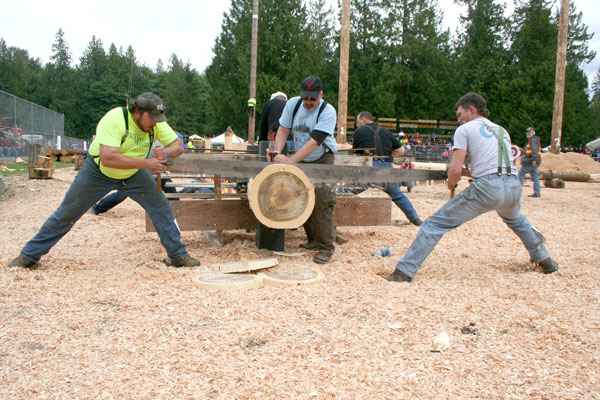
"Real" science - as it is practiced today - is like a two man band saw: push - pull - push -pull.. Baconian observation - Model building and testing - Baconian oservation - Model building and testing..
I conclude that the Baconian "versus" Model driven science debate is a pseudo-debate (not to mention abstruse, academic, pedantic, useless and boring..)
What a surprise then - or is it? - that this pseudo-debate has been instrumentalized in the larger pseudo-debate over whether or not CC / GW is occuring. The fossil fuel lobby and Conservative Think Tanks discovered in meteorologist prof William Gray an inveterate and boisterous Baconian who, for whatever reasons, detested model-driven climate science and was willing to take the stage at any moment to denounce CC / GW as bad science. A true God-send! Gray played a major role in the controversy swirling around GW and hurricane science in the early years of the new millenium.
For the Conservative Think Tanks who paid Gray's travelling expenses and honorariums, the issue was never philosophical or scientific truth but the instrumentalization of an academic pseudo-debate to discredit CC / GW science and the drive for alternative (carbon free) energy sources: wind, solar, geothermal, tidal power, energy efficiency, public transport, rail transport.. measures which would harm the bottom line of the fossil fuel megaliths, their clients, stockholders and CEOs.
notes:
1- An important source on how serious CC / GW is becoming is the re-insurer, Swiss RE. Re-insurers are the insurance companies of insurance companies. They provide a "slush fund" into which their client companies can dip in case of extremely heavy payouts following major natural disasters. In its own interests Swiss RE, one of the biggest, has begun to take CC / GW science seriously and promotes CC adaptation measures to protect vital ecosystems and human infrastructure.
http://www.swissre.com/rethinking/climate_and_natural_disaster_risk/Low-tech_ways_to_cope_with_climate_risks_in_the_Caribbean.html
2- CC (drought) as a factor in the Syrian tragedy?
http://www.smithsonianmag.com/innovation/is-a-lack-of-water-to-blame-for-the-conflict-in-syria-72513729/?no-ist
CC / GW as "threat multiplier" in the geopolitical arena:
http://transparencycanada.blogspot.ca/2014/10/pentagon-preprares-for-climate-change.html
http://transparencycanada.blogspot.ca/2014/10/climate-change-is-threat-multiplier.html