An investigation of the theme of Transparency in the Canadian Federal Government. Non-partisan: Power corrupts and Absolute Power corrupts absolutely. Our model: the muckracker journalists.
Michael Benton: When Life Nearly Died (Thames and Hudson, 3rd edition, revised, 2015), 313 pages, glossary, index, chapter notes, bibliography, numerous illustrations.
abbreviations used in this article:
CO2: carbon dioxide, a greenhouse gas causing global warming GHG: greenhouse gas GW: global warming mya: millions of years ago
The Late Permian Mass Extinction event, 250 mya, was the greatest. It was caused by massive volcanic release of greenhouse gases (GHG), overheating the earth and driving most animal and plant species on land and sea to extinction. The current human induced extinction rate is believed to largely exceed that of the Late Permian extinction. When Life Nearly Died or everything you wanted to know about mass extinctions were afraid to ask. One of the most pleasantly readable, complete and up to date texts accessible to the general reader. Reads like a historical novel. Definitely recommended.
This text covers the modern history of evolutionary theory with special emphasis on the spectacular advances in our understanding of mass extinction mechanisms, their impacts, duration and timing which have occurred over the last fifty years.
Estemmenosuchus-mirabilis: the only known omnivore with antlers. Body of a hippo, antlers of a moose, muzzle of a sabre tooth tiger - a veritable chimeric monster! An early - Permian age - member of the synapsid clad (genetic group) which gave rise to mammals.
Traditionally, the appearance and evolution of life on earth were framed within a biblical understanding of the origin of the world. During the Industrial Revolution mining activity increased, bringing to light many fossils which were studied and classified by by students of the emerging earth sciences: geology, paleontology, ecology, climatology and evolutionary biology. European scientists soon realized that the Earth had to much older than the chronology presented in the Old Testament. The fossils were records of life in earlier aeons of Earth's existence. But how old is the Earth?
Over time, a pattern of "gaps" in the fossil record emerged. Gaps in fossil chronologies appeared everywhere - they are the rule, in effect. The "fossil record" - the chronology of biological evolution as recorded in successive rock strata - is a series of fragmentary chronologies of biogeological history broken by changes in topology of the earth's surface and seafloors. Regions of upthrusting mountains will expose seabeds to the atmosphere and to erosion by rain, river flows and windborne sand particles. Overtime, the former seabed will erode exposing increasingly older sediments (and the fossils they contain).
sedimentary fossil formation: click on image to enlarge A big part of the work of geologists and paleontologists is to match segments of rock strata from different parts of the globe to create a Universal Earth History. Some types of fossils are extremely useful in constructing this History. A critter which lived for several tens of millions of years and was widespread provides a sort of "key" or "index" allowing us to say that a layer of sediment in Russia corresponds to a layer in South Africa: the fossils were deposited at roughly the same time. This allows paleontologists to align fossil chronologies from different parts of the world.
During the 20th century, particularly the second half, great progress was made in dating fossils and rock strata using both radioactive and non-radioactive isotopes (see note 1). Volcanic ash layers with specific isotopic signatures, allow geologists to posit the synchronous nature of two, geologically separated strata or fossils beds. In some cases radio-isotopic measures allow researchers to assign an absolute age to a rock stratum: the volcanic ash signature in this stratum shows that it was deposited X number of years before the present. Four digit accuracy is attainable. This is a vast improvement from the time of Charles Darwin, the mid-19th century, when the most that could be said was that one layer of fossils was older or younger than another (relative geological age).
However, some gaps in the fossil record remain recalcitrant to analysis. Is the fossil record really broken in places? Did one group of animals, one type of ecosystem, one climate regime suddenly replace another? Or is the break merely apparent, the result of missing data?
The Permo-triassac boundary (mass extinction). Click on image to enlarge. The Lower layers (Permian age) are rich in fossils of dicynodonts (herbivores related, distantly, to mammals). These disappear and are replaced by lystrosaur species (another herbivore type distantly related to mammals) above the extinction boundary. Note that the boundary zone itself - when the Great Extinction occurred - is virtually devoid of signs of life. Charles Darwin, the recognized founder of the theory of Evolution by Natural Selection, held to that the evolution was continuous but the fossil record, for geological reasons, contained gaps - missing data. This position came to be known as Uniformitarianism. Uniformitarianism, as a school of thought, held that the laws and processes of nature do not change over time. Natural processes occur slowly without "quantum jumps" or discontinuities. Christian creationists of Darwin's time, on the other hand, assimilated evidence of mass extinctions - holes or gaps in the fossil record - to the biblical story of the Great Deluge. God chose from time to time to destroy most / all life on Earth and then create whole new planetary ecosystems from scratch. Their school of thought came to be called Catastrophism. Some even suggested that dinosaurs were left behind because they were too big to fit in Noah's ark and drowned in the Great Deluge sent by God as punishment for mankind's sinfulness.
History, of course, often takes strange detours. Darwin proved to be wrong about the continuity and gradualness of natural change. As the fossil record becomes more complete and chronology more accurate, some gaps just won't go away. Instead, they are reinforced and confirmed by accumulating evidence. The contemporary acceptance of the non-uniformity of natural processes over times is called, naturally, Neocatastrophism. There's a lot of irony in this story. Poor Darwin got the fossil record wrong but for the right reasons (in denying God's heavy handed intervention in Natural History). The creationists got the (non-uniform) fossil record right but for the wrong reasons. You could write a comedy about this.. In reality, it is a testimony to the robustness of the Darwinian theory of Natural Selection that it survived several such revolutions in the scientific understanding of the World Process and has emerged, not merely unscathed in its essentials, but reinforced and validated in its applicability. Evolution by Natural Selection has all the hallmarks of a Good Scientific Hypothesis. It was won its spurs in the 150 years since the publication of The Origin of Species.
Gorgonops -"monster face". Teeth specialized for different functions - a mammalian trait - as well as details of skull structure show that gorgonops were (very) distant cousins! Most gorgonopsid species died out during the Great Permian extinction and aftermath. The remainder died out during the following early mesozoic era (Age of Dinosaurs). According to contemporary understanding, there have been five massive extinction events. Of these, the Late Permian, 250 mya, was the worse, killing off about ninety percent of life on land and sea. In addition there have been, according to experts and criteria, some 10 to 20 minor extinction events, often regional rather than global in extent. The Permian extinction is now generally believed to be due to massive Global Warming (GW) caused by rapid release of GHG of volcanic origin. The recent rapid decline in world wild life has led some scientists to argue that we are living through the sixth mass extinction of life on earth. Mass extinctions are dramatic and biologically important events but rare, occurring once in tens of millions of years. In reality, probably more than 95% of species go extinct during normal, non-extinction periods. This is the so-called "background extinction rate". Conservationists are worried about the health of Earth's ecosystems because today's extinction rates are several times expected background rates.
http://transparencycanada.blogspot.ca/2013/12/book-review-e-o-wilson-future-of-life.html While rare, mass extinctions are important because they are dramatic accelerators of evolution due to increased environmental stresses and altered relationships between surviving - and newly immigrated - members of ecosystem communities. Organisms that were once barred entry to a region - because of competition with a better adapted local resident - may be free to enter once the competitor is eliminated. The newly arrived organisms will be under strong environmental selective pressures as they adapt to their new habitation. They will also provide strong selective pressure on resident organisms via competition for resources and habitats. New symbiotic alliances between species will be forged: another source of selective pressures as partners fine tune their mutual adaptations. Ecological niches left empty by extinction will be filled by immigrants or mutated resident organisms. New ecological niches may be created from altered interspecies interactions (because of eliminated links in the food web) or from interactions with immigrant species. Increased selective pressures during the recovery phase will trigger mutator genes into activity, increasing mutation rates generally. The recovery phase is thus a hothouse of biological innovation. Ironically, while Darwin combated the Catastrophists of his day, contemporary Neocatastrophism actually tends to reinforce and confirm Darwin's hypotheses concerning Natural Selection. It is important to recognize the disruptive / innovative nature of mass extinction events. They do not select for the "fittest" according to the Rule Book. Mass extinctions tear up and rewrite the Rule Book. Mass extinctions cause evolution to veer off along strange, unpredictable trajectories. For example, most people, if asked, would say that mammals are more recent than dinosaurs. In a sense, this is correct. Small, chipmunk-like or rat-like mammals appeared during into the Age of Dinosaurs (Mesozoic Era) when dinosaurs already ruled.
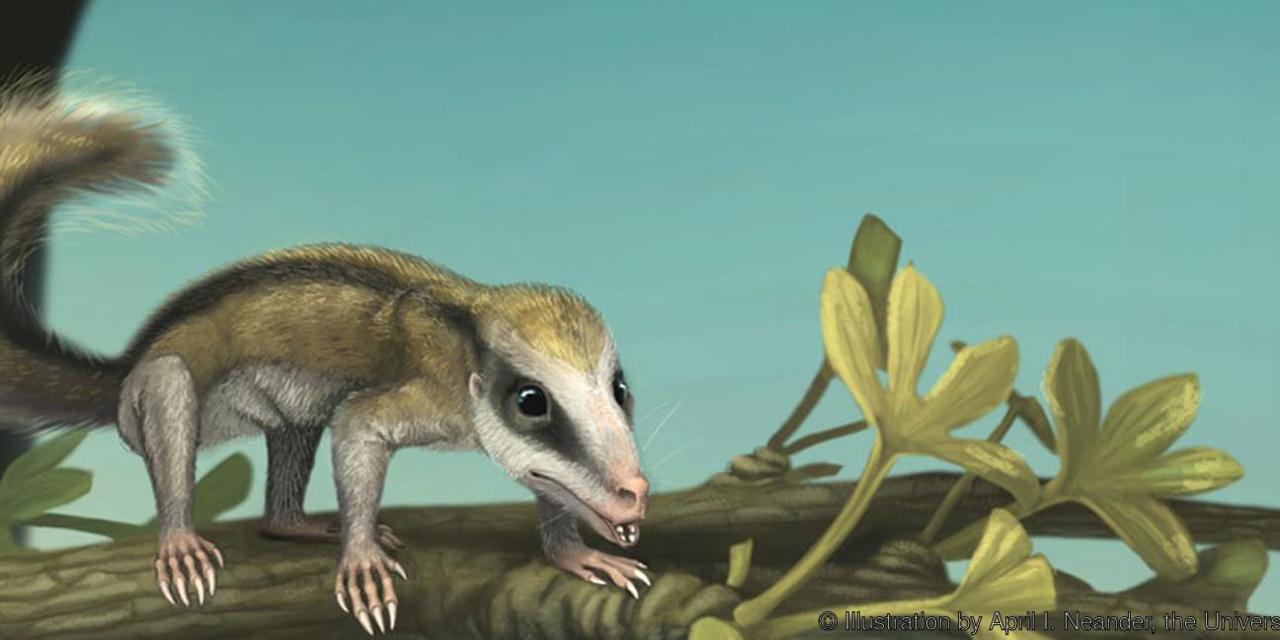
Agilocodon, a chipmunk-like critter that lived 174 to 163 mya.
http://novataxa.blogspot.ca/2015/02/agilodocodon-docofossor.html?spref=fb However, these early true mammals are the highly mutated descendants of the
weird, dominant synapsid "monsters" of the Permian. The Permian
extinction, in effect, put an end to the "first age of mammals" allowing
the ancestors of the dinosaurs - and the dinos themselves - to get the
upper hand for a hundred million years or so. It is only when the dinos themselves were eliminated by the Late Cretaceous extinction, 65 mya, that the mammalian tribe was given a second chance as dominant terrestrial vertebrates. Mass extinctions tear up and rewrite the evolutionary Rule Book.. So what caused the Great Extinction then? The continents of the time, through plate tectonic drift, had coalesced into a single megacontinent, Pangaea ("all Earth"). This was a disaster, a perfect storm waiting to happen. The worst part was the blockage of tectonic plate movement around the perimeter of Pangaea. The mounting pressure in the Earth's crust and mantle eventually provoked a massive outpouring of magma (lava originating from deep within the Earth) in what is now Siberia. Vulcanism was so intense that it was not confined to individual volcanic cones. Large fissures opened and poured forth molten rock and huge quantities of GHG such as CO2 and methane. GHG warmed the earth, expanding the Great Central Desert of Pangaea. Species died off faster than the background extinction rate marking an extinction event in progress. In the sea, for a variety of reasons, large regions stratified, reducing circulation of oxygen and nutrient minerals. These anoxic (low or no oxygen) strata became dead zones, devoid of life and sometimes laden with poisonous hydrogen sulfide gas. During sudden massive turnovers of stratified oceanic layers, hydrogen sulfide gas was released to the atmosphere, poisoning life along seacoasts. Sometimes the extinction zones could reach hundreds of miles inland as hydrogen sulfide was carried inland on prevailing coastal winds.
And then things got really bad. Life is persistent and resilient, it adapts to and opportunistically exploits changing environments. As Late Permian climates deteriorated new species emerged to replace those eliminated. Some paleontologists even speak of a short-lived mid-extinction recovery phase. But then the Earth's climate systems were driven through a climatic tipping point by particularly strong Late Permian Siberian eruptions. Massive GHG induced global warming delivered the knockout punch. The warming polar regions and their contiguous coastal waters thawed. This had two effects:
1- thawed permafrost containing buried organic matter provided food for microbes and fungi which broke down the organic matter, releasing industrial quantities of GHG: CO2 and methane.
2- methane ice (methane clathrate) - ice containing imprisoned methane - in polar soils and offshore seafloor melted, releasing industrial quantities of methane, a potent GHG.
This, second pulse of GHG release was the sucker punch that nearly killed off life. About 90% of non-microbial species on land and sea went extinct. Evolution's trajectory was permanently modified by the shake up the Late Permian extinction.
"During the Carboniferous and Permian, the diapsids had been a minor element of most faunas, only a small lizard-like creature here and there, never large, and rarely more than 2 or 3% of the total number of animals. In the Early Triassic [period following the Permian extinction], some diapsids, in particular the group called the archosaurs ("ruling reptile") took over the carnivore niches. They preyed on the re-evolving synapsid [mammal ancestor] plant-eaters. During the first 20 million years of the Triassic, the basal archosaurs diversified slowly, and eventually included huge predators, some of them up to 5 meters long. The first dinosaurs appeared about this time, and diversified in the Late Triassic, rather small, bipedal forms at first, they soon reached huge size. Mammals were around during the entire age of dinosaurs, small descendents of the formerly dominant synapsids, but the dinosaurs ruled the Earth for the next 165 million years, until their extinction 66 million years ago. Then, and after a long wait in the wings, the synapsid descendants, the mammals, finally moved back to dominate the Earth, a position they had last had in the Late Permian. The synapsid - diapsid - synapsid cycle [of dominance] had gone full cycle." Page 24
Ok, GHG can be dangerous but what is the relevance for today?The recent explosion of knowledge about the mechanisms of mass extinction is important for understanding the gravity and possible outcome of the current ecological / demographic crises the World is living through. At present, human agricultural and industrial activity has reached a level where it is perturbing the rhythm of the natural recycling of biologically active elements. This situation inadvertently replicates the chemical imbalances of previous mass extinction events, the Great Permian Mass Extinction in particular.
A little reflection will show why such perturbations are important. The fact that an element like oxygen, nitrogen, sulfur, carbon, phosphorous, iron is biologically active means two things:
1- abnormal amounts (too little, too much) are liable to interfere with the healthy - normal - functioning of biological systems (organisms, ecosystems). Like powerful machinery or chemicals, what is useful becomes dangerous when misused. Nitrogen, sulfur and phosphorous are extremely active biologically and when present in the wrong amounts or in the wrong form are among the most toxic elements known.
2- "tiny" but chronic imbalances in the rates of element recycling rates soon lead to critical imbalances. Critics of GW (hypocritically or stupidly) argue that the amount of imbalance in Earth's carbon cycle induced by human industrial activity and agriculture is tiny in comparison to the total amount of carbon cycling in Earth's ecosystems. By way of comparison, consider a "tiny" imbalance in the the birth / death ratio of human population leading to a 1% per annum increase in world population. One percent, so what? But this "tiny" increase, year in and year out, leads to a doubling of world population in a mere 70 years, less than a century and just under three generations! The lesson to take away: small cumulative increases (or decreases) lead to surprising results in short order. Even at a much more leisurely growth rate of 1% per decade, human population would take 183 years to double, a mere five generations, a period of time that would only take us back to the invention and early expansion of rail travel and electrical telecommunication (telegraph), a period that we recognize as the beginning of the contemporary technical, industrial society, not so long ago..
We now understand the role that such "tiny" chronic imbalances - produced by natural causes, not human activity - play in mass extinctions of the past. This knowledge places humanity at a cross-roads. Do we, collectively, make the choice to replace GHG producing technologies in industry, power production, transport and agriculture by renewable "green" energy technologies: solar, wind, tidal and wave power, passive solar building heating, hydrogen fuel cells, geothermal energy, energy efficiency and low energy consumption lifestyles? Or do we maintain the status quo fossil energy system till it either disrupts climate to the point that civilized society collapses or we run out of cheap fossil fuel? The choice is ours, today, especially the young people, to make. My generation, the Baby Boomers - those born between 1946 and 1963 - blew our chance at greatness. We, collectively, let ourselves be conned into a hyperconsumptive lifestyle designed (consciously or not) to maximize the profits of multinational corporations. Even those who did not aspire to become the high living "officers" of the multinationals or the financial sector which bankrolls them, applied ourselves to becoming members of the servitor classes (professionals, middle management, technical support). We learned to define our self-worth relative to those we could look down upon because they could not consume as much as we could. In the meantime, we learned to reject the Real Values of life: family, community, pride in work well done, the expression in our personal lives and work of our deepest held values. The millennials (born 1982 to 2000), though they know it not yet, though they feign ignorance or cower in cheap cynicism, will be forced to make the necessary changes my generation failed to make. Do the millennials still have the time and the resources to make the transition to a Green Economy? It's anyone's guess. There may still be enough time and readily extractable resources left but the transition will no longer be peaceful. We Boomers held back change too long.
Methane blow hole in Siberia caused by thawed permafrost. Permafrost locks up buried organic manner for millennia (or longer). When it thaws, the formerly frozen organics become food for bacteria and fungi. The result of their digestion are GHG like CO2 and methane. When gas pressure builds up it creates these huge blow holes in the Siberian tundra. For size comparison note the tiny human figures along the upper rim. The GHG released by thawing permafrost and seabed methane-ice deposits constitute a positive feedback, amplifying the original rise in temperature that released the GHG. This mechanism was the "second pulse" of GHG that constituted the "sucker punch" that killed off 90% of life on Earth during the Permian Mass Extinction. notes:
Thus carbon 12 has 6 protons and 6 neutrons in its nucleus, carbon 13 has 6 p and 7 n. Both are non-radioactive (stable isotopes) with virtually identical chemical properties (only their rate of reaction in biological chemistry may vary slightly). Carbon 14 has 6 p and 8 n but is radioactive (non-stable isotope). In 5,730 years, one half of the atoms in a sample of carbon 14 will have decayed to nitrogen 14 (with seven protons and seven neutrons in its nucleus). Thus the "half-life" of C 14 is 5,730 years. If one can determine the amount of C 14 which remains in an organic specimen (mummy wrapping from a Pharaoh's tomb, for example), one can determine the date of the specimen. A bone which has only one quarter of its original C 14 can be dated to 2 X 5,730 or approximately 11,500 years before the present. (One half of the C 14 remains after one half-life. The second half-life reduces the amount remaining by half - 1/2 X 1/2 = 1/4.)
Andrew H Knoll: Life on a Young Planet, Princeton University Press (2003, 2015), 246 pages, index, numerous photos and diagrams, very extensive "further reading" list for those who want to pursue the origin of life and early evolutionary development.
We shall not cease from exploration And the end of all our exploring Will be to arrive where we started And know the place for the first time T S Eliot
Despite an almost bewildering diversity of form and function, all cells share a common core of molecular features.. The reciprocal observation is equally striking. In spite of their fundamental unity of molecular structure, organisms display extraordinary variation in size, shape, physiology, and behavior. Life's unity and diversity are both remarkable in their own ways; together they comprise the two great themes of comparative biology. (page 17, emphasis added)
Animals may be evolution's icing, but bacteria are the cake (page 19)
abbreviations used in this article:
CO2: carbon dioxide, involved in the photosynthesis / respiration cycle. It is also a greenhouse gas, trapping heat (infrared radiation) and warming the earth.
Mya: million years ago
geological periods discussed:
Cambrian: 543 Mya to 485 Mya. During the "Cambrian Explosion", "large" - multicellular - plants and animals appeared. "Modern" - oxygen breathing- forms of life proliferated in the seas and soon spread to land in the following order: plants, arthropods (insects and their kin) and, finally, our own ancestors, the vertebrates (marine tetrapods)
Proterozoic (also called the pre-Cambrian): about 2.5 billion to 543 million years ago. Aside from colonial microbial stromatolites which formed coral-like structures in water, life was microbial. See two stromatolite photos below.
Most definitely a nerd book. The intended readership are both science literate general readers and workers in the earth and life sciences. To appreciate this text fully you need a decent background - self-acquired or school learned - in the earth sciences, paleontology and evolutionary theory in particular. A basic grounding or working knowledge in biology (ecology) and (bio)chemistry helps. On the plus side, the author's style is remarkably readable. Essentials are generally well explained, allowing the novice to tread into deeper waters than they otherwise would be capable of handling.
The subject of Life on a Young Planet is the appearance and evolution of early life on earth before the Great Cambrian Explosion, about 600 million years ago (Mya), when "large" (visible to the naked eye) plants and animals wildly proliferated and "the world as we know it" was born. On young earth, life was microscopic: bacteria, one celled animals and plants.
How old is life? The first microfossil traces of life are hotly contested. Mineralogical processes can produce microfossil like structures. Finding "biomarkers", chemical signatures of life (or of its decomposition products), in association with putative microfossils can, in some circumstances, provide a strong case that one is dealing with real microfossils. Today, claims of microfossils 3.7 years old are being made. If confirmed, they would indicate an extraordinary early emergence of life. The solar system was born 4.5 billion years ago and the earth itself is only about 4 billion years old!
The modern tree
of life, based on genetic similarity. Modern multicellular animals and plants are found in
the upper right hand corner among the "more evolved" Eukaryota. Click on image to enlarge.
Everything you wanted to know about Archaea - the extremophiles - but were afraid to ask:
A modern
testate amoeba, which lives in a mineral shell which is secreted by this one
celled "animal" (technically, a protist, neither animal or plant). Testate amoebas are Eukaryota, "more evolved" lifeforms, and lie on the rightmost branch of the Tree of Life along with animals and plants. See above diagram. They are one of earliest animal-like life forms dating back at least 750 Mya, well before the Cambrian Explosion when modern multicelled animals and plants proliferated, diversified and flourished. Testate amoeba are still important members of contemporary aquatic and soil ecosystems!
A fossil testate amoeba shell unearthed by author Knoll. The white bar on the lower left of the photo is 25 microns (millionths of a meter). The shell is thus about 100 microns in length, the width of the average human hair. It was secreted about 720 to 635 Mya in the pre-Cambrian.
Video of living testate amoeba. The shell is composed of sand grains cemented together with silicic acid secreted by the amoeba.
Over time early microbes developed communal "biofilms". Later, biofilms would evolve into the tissues of higher multicellular organisms like plants and animals). Stromatolites are pseudo-corals consisting of layers of mineral matter (sand grains or fine sediments) alternating with photosynthesizing microbial mats. Stromatolites may achieve impressive dimensions and some stomatolite fossils have been dated at a credible 3.5 billion years. Interestingly, living stromatolites are found in some seas today.
living stromatolites, Shark Bay, Australia
pre-Cambrian stromatolite fossil from Bolivia
Life on a Young Planetargues that life is a co-dependent, co-evolving network of energy flows, chemical cycles and living organisms, a living tissue or fabric which includes the body of the earth itself, its seas and atmosphere. The health of individual organisms and species ultimately depends upon the integrity of the whole fabric, a lesson humanity is painfully learning today because of our disruption of vital ecological systems and the chemical equilibria of the planet.
An interesting example of co-dependence and co-evolution are the Eukaryota, the domain which includes dominant modern life-forms like plants and animals. It is now believed that the Eukaryota arose from the symbiotic co-dependence of single celled organisms. It is believed that the mitochondria - the sub-cellular "organelles" which our bodies' cells use to burn sugars with oxygen to liberate vital energy - were once free living organisms. Several lines of evidence support this conclusion, including the fact that mitochondria contain their own DNA (genetic code) and replicate independently when our bodily cells replicate.
From the micro-level to the macro-level, the co-dependence and co-evolution of life is evident. Plants absorb carbon dioxide (CO2) from the air and water from the soil. Using the energy of visible light rays from the sun, sugars, starches and other energy rich molecules are synthesized from CO2 and water during photosynthesis. Oxygen is released as a by-product. Photosynthesized energy rich hydrocarbons (sugar, starch, oil, fat) form the basis of the food web. Herbivores eat plants to incorporate energy rich hydrocarbons to power their metabolisms. Carnivores eat herbivores to incorporate energy rich molecules incorporated in the herbivores bodies. Through co-dependent co-evolution, efficient carbon cycling was established over time: the photosynthesis / respiration cycle. Plants absorb CO2, synthesize energy rich hydrocarbons and release oxygen during photosynthesis. Animals respire the oxygen released by plants to burn energy rich hydrocarbons, releasing CO2 in the process. A rough equilibrium between photosynthesis and respiration has been established over time allowing all organisms to flourish. Too much oxygen, and our forests would burn up in planetary conflagrations while too little would prevent the emergence of animal life.
But co-dependent co-evolution runs even deeper. Both plants and animals are Eukaryota. When these organisms die most of their organic matter is quickly recycled by decomposers: insects, worms, fungi, bacteria.. But not all organic matter is recycled. In water, organic matter may precipitate to the bottom as sediment before it decomposes. Such environments are often anoxic, contain little or no oxygen. Now, Eukaryota like plants and animals require oxygen and are therefore incapable of extracting energy from buried sediments (and, in the process, recycling vital bio-elements back into the environment, in this case, sea or lake water). Only anaerobic prokaryota - micro-organisms not requiring oxygen for metabolism - are capable of processing buried organic matter to liberate essential bio-elements like nitrogen and sulfur. In effect, without the recycling activity of the "lowly" prokaryota, we "more evolved" Eukaryota would disappear as vital bio-elements were buried and removed from biospheric circulation! The "web of life" is much more than a fuzzy New Age or mystical meme. It is a literal, physical reality upon which our very lives depend..
As prof Knoll puts it so eloquently,
"Life on a Young Planet records that moment in time when biologists and Earth scientists began working together to build an integrative picture of our planet's history. We now know that we can only understand life's evolutionary trajectory by embedding it in the chronicle of Earth's dynamic environmental history. That is the lesson of deep Earth history, and it is also a lesson for today, when human technology has emerged as an environmental force of geological prominence. Whether we look outward, searching for a second example of life, or forward, hoping to navigate wisely through an era of mounting global change, the record of Earth and life through time provides a fundamentally important catalog of experience that can help guide our actions." (page XV, emphasis added)
As is so often the case with the best science writing, much of the charm of this book comes from it's evolutionary approach to science itself. The clash of competing theories, the fruitful alliances between disciplines, the slow unearthing of critical clues.. all these are grain for Prof Knoll's mill. For those interested in life's early history and deep ecology and who possess the requisite science background, this book is a must read. Even novice earth science readers should find it a challenging and stimulating read (and don't forget the extensive suggested reading list for aid..) Definitely recommended.
"For scientists, unanswered questions are like Everests unclimbed, an irresistible lure for restless minds" (page 224)
Thom Van Dooren: Flight Ways, life and loss at the edge of extinction: Columbia University Press, 2014; 164 pages, bibliography, index, copious chapter notes, photos.
"..learning to mourn extinction may.. be essential to our and many other species' long term survival"
"Sadly, extinction is not a topic that generates a great deal of popular interest at the present moment. I suspect, however, that in the future to come - if humanity is here at all - extinction will be among the handful of themes that is understood to be central, perhaps even definitional, of our time." "Again and again, we need to ask: What does this loss mean inside its specific multispecies communities? How are "we" called into responsibility here and now, and how will we take up that call?"
whooping crane, North America: elegance in motion This is what I call an "angry making" book, the kind that fills me with despair and rage at the human race and its self-centered stupidity. Prof Van Dooren's theme is extinction of wildlife, what can be done to prevent extinction, and what we are, in fact, doing. The text focuses on the "stories" of humanity's interaction with several avian species: Pacific Island Albatrosses, Australian penguins, Hawaiian crows, Indian vultures, American whooping cranes.
This book is not an easy read on several levels. The first, and most obvious hurdle, is the academic language (the author is an environmental philosopher and anthropologist at the University of New South Wales, Australia). The lingo is challenging to those unversed in the humanities, especially contemporary philosophy, ethics and anthropology,.. The second hurdle compounds the former: the "environmental humanities" demand a serious "reframing" of humanity's relation to nature. Such reframings / recontextualizations are never easy! Traditionally, they are associated with major life-crises such as religious conversion: consider the current vogue of jihadist radicalization of Western youth. These people are generally tortured souls. People do not undertake such "conversions" without good reason.They only do so when they understand that the "roadmaps of reality" of their society no longer correspond to reality, lead nowhere..
Of course, one can choose not to confront our challenges. We may not have much power, personally, to change things but at least we have the power of this choice. Up to a point, at least, evasion is possible. Some people enjoy spewing hate at imaginary - or real but "demonized" - enemies. Think of the hate-spew of the more fanatical GW deniers, conspiracy theorists or Donald Trump's followers. Or the super-"patriot" who killed pro-European Union British Labour MP Jo Cox:
I have never been able to embrace the authoritarian mindset, with its black / white dichotomies of "good versus evil", "us versus them", "Absolute Truth versus Absolute Falsehood". My emotional reaction to the fact that the world is going to hell finds no such convenient outlet. At times this has left me quietly frustrated, angry or despairing. Books like prof van Dooren's Flight Ways depressed me so, in the past, I avoided reading them..
The joys of Doomerism
Recently, given the inability of the world's "leaders" and publics to come to grip with the various demographic, ecological, developmental and moral issues (like the distribution of wealth) we collectively face, I have come to the conclusion that any action we take now will be "too little, too late". The world won't end, of course: humans are mammals and mammals seem to be tough critters. Ancient stem-mammals predate the dinosaurs, surviving two major and several minor mass extinction events.
It is even arguable that humans are in so much trouble ecologically and demographically todaybecause of our unprecedented success in the "Darwinian struggle for survival".In this view, we are suffering "an adolescent crisis" because we have not learned to harness the incredible power of our mammalian brains..
Whether one is an optimist or a pessimist - whether humanity is suffering adolesence or the death agony of an abortive species - there is going to be hell to pay for our stupid mucking around with the planet's "life support systems". So, in this limited sense, I am a doomer - of the "squishy soft" variety because I hope for collapse followed by rebirth / regeneration (footnote 1).
Accepting the reality of impending mass human die-off has, oddly, left me less angry and more compassionate. I realize that humans are only doing what 3.5 billion years of Darwinian evolution have programmed our genes and nervous systems to do. Add to this the ecocidal cultural programming inherited from some 8,000 years of Patriarchy with its ethos of imperial expansion and "plundernomics" (the economics of plunder, pillage and exploitation).
vulture
Towards a Buddhist ecology?
Prof van Dooren is asking no less than a total revision of our worldview: Who / what are we? What is our "place" in Nature? What "functions" do we serve (if any)? What is the value of life (human and other) and how do we prioritize the values of different kinds of life? (And who gives us this "right" to prioritize the lives of others in the first place?)..
These ain't easy questions! A useful distinction was made by the "Buddhist economist" E E Shumacher (Small is Beautiful, 1973 /1999): questions which have definite, unambiguous answers are "closed questions". Logical or mathematical proofs are good examples of closed questions (and their equally closed answers). If a master mason can build a wall in 2 days and an apprentice in 4 days, how long does it take a master and 2 apprentices to build a wall?
Answer: 1 / (1/2 + 1/4 + 1/4) = 1 day. If you know the trick, you got the answer! (And the answer is always good, 500 years ago or 500 years in the future..) However, the Divinity, one suspects, is perverse because, while relatively easy to solve, such closed questions are generally trivial in nature. Solving algebra problems may be useful (or fun) but the really tough questions, those that tend to keep us awake at night, are generally "open" questions. These questions have to be asked - and answered - anew by each generation and by each individual. Is life worth living? What is the Good Life? What mission is God calling me for? Why am I on this earth?
Since Flight Ways deals with open questions, it is decidedly not an easy read. (I speak from my own experience, with no formal training in philosophy beyond Phil 101 and 102.) Despite the difficulty, the book's "message" is worth the effort. I put "message" in quotes to indicate that the author's goal is not so much to convey a body of knowledge than to create within the reader a new way of seeing the world. Decidely a difficult task!
Flight Ways is an interesting antidote to texts like Barnosky 1, Barnosky 2, Reiceand Wilson in which nature is "reduced" to quantitative, economic terms, "parametrized" to fit into equations of ecosystem productivity in order to generate a monetary value. The "value" of a piece of land and its ecosystem can thus be compared to the value generated by a condo development. I have never found this type of calculation satisfying. How, for example, do you calculate the "cost" of a cancer death caused by pollution? By a simple actuarial calculation?The victim's life was, statistically speaking, shortened by X years, the annual salary of the deceased was N dollars, so their death has a value of X times N. OK, I get it, but what about the long term ripple effects of the death? What about the children who never got a chance to go to college because of the loss of the breadwinner of the family? What about the psychological impacts to the family, how do we quantify those in dollar terms? (Does it even make sense to attempt to try to quantify them..) I am not, be it noted, denying a certain utilitarian value of such analyses.For example, in comparingtwo projects (for, say, an organic farm) involving economic transactions which provide livelihoods for people. "All things being equal" we would choose the project offering the biggest positive (numeric) advantages: net biomass productivity and its commercial value, the number of jobs, the net economic activity created for the local region, ecological impacts.. (note2)
However, Flight Ways goes beyond the monetized value of nature to touch other - vital - dimensions of our involvement and contact with nature. In addition to monetary value and "ecosystem service" value, we are asked to consider the being (or, rather, the being-in-the-world, the lived experience of the world) of other life forms.
Such a vision or experience of life demands the cultivation of empathy (if not compassion). Hence my reference in the title to "Buddhist ecology". The degree to which such a view is alien to our "normal", contemporary worldview is easily seen in the difficult convoluted language needed to express what to us is not, or no longer, "natural".
The following "mission statement" for the series to which Flight Ways belongs,Critical Perspectives on Animals: Theory, Culture, Science, and Law indicates the syntaxicand semantic difficulties occasioned by the required "paradigm shift" in our thinking about our relation to nature.
"The
emerging interdisciplinary field of animal studies seeks to shed light
on the nature of animal experience and the moral status of animals.
Recent work on animals has been characterized by an increasing
recognition of the importance of crossing disciplinary boundaries and
exploring the affinities as well as the differences among the approaches
of fields such as philosophy, law, sociology, political theory,
ethology and literary studies to questions pertaining to animals. This
recognition has brought with it an openess to a rethinking of the very
terms of critical inquiry and of traditional assumptions about human
being and its relationship to the animal world. The books published in
this series seek to contribute to contemporary reflections on the basic
terms and methods of critical inquiry, to do so by focusing on
fundamental questions arising out of the relationships and
confrontations between humans and nonhuman animals, and ultimately to
enrich our appreciation of the nature and ethical significance of
nonhuman animals by providing a forum for the interdisciplinary
exploration of questions and problems that have traditionally been
confined within narrowly circumscribed disciplinary boundaries."
One of the things I really liked about Flight Ways is its debunking of "human exceptionalism" especially its silliest, kitschiest manifestations which modern philosophers seem too ready to accept. Prof van Dooren demolishes the ridiculous pretension that "animals like humans experience death but only humans know death". In reality, higher mammals and brainier birds like crows, show behaviors following death of companions which, when seen in humans, are labelled "grieving".
Another admirable feature of Flight Ways is its recognition - and employment - of "story" ("narration", "myth"). I can't do better than cite page 10 (emphasis added here and in citations that follow):
".. at the same time as they may offer an account of existing relationships, stories can also connect us to others in new ways. Stories are always more than simply descriptive: we live by stories (see footnote 3), and so they are inevitably powerful contributors to the shaping of our shared world. This is an understanding that works against any neat or straightforward division between the "real" and "narrated" world. Instead, I see storytelling as a dynamic act of "storying" the world, utterly inseparable from lived experience and a vital contributor to the emergence of "what is". Stories arise from the world, and they are at home in the world.. 'Worlds are not containers, they are patternings, risky co-makings, speculative fabulations'. Even a story that aims to be purely mimetic can never simply be a passive mirror held up to 'reality'. Stories are a part of the world, and so they participate in its becoming. As a result, telling stories has consequences: one of which is that we will inevitably be drawn into new connections, and with them new accountabilities and obligations.
And so the bird stories that this book tells / does.. attempt to enact stories as interventions into existing patterns of living and dying in an effort to work toward better worlds."
pacific island albatross and young
This view of story is akin to the role of myth in "primitive" religions: the story reveals / creates / participates in the shared "reality" of a human group.Such stories provide constant moral reference points, are sources of shared figures (of speech, symbols, rituals..) Such stories are both empowering and coercive. By contextualizing or framing the self in a larger Whole, "sacred" stories confer purpose, meaning and value on those who enact, literally "em-body", them in their daily lives. Negative narratives - those of dysfunctinal families or demented sects - can do enormous violence and harm, revealing the real power of story / narrative / myth (note 4).
Without sentimentalization, Flight Ways opens a door to a different vision of nature, wildlife and humanity's relation to these. Rather than assessing the monetary value of species and the ecosytem "services" they provide "for" us, we are asked to consider the lives of other lifeforms as alternative "ways of living". Animals, like humans, are seen as having a subjective core, a "self" with its attendant existential (or phenomenological) "space". Non-human species, like human cultures, express their nature in "ways of life" which provide the necessities for species survival: nourishment, shelter, production and protection of progeny. Seen in this light, we see there is not so much, in essence, that separates us from the rest of the living world! Except, of course, that we humans have, collectively, greater ability to influence the physical environment and the ways of life of other species. In addition, we also possess the gift - or curse! - of being able to see the Big Picture and the role we play in it. (This may be what distingishes humans from the rest of the animal kingdom. We possess the ability to adopt a "meta-perspective" - "outside" of ourselves - from which we view our own actions and their consequences on others..)
The "Buddhist ecology" - the term is mine, not the author's - proposed by Flight Ways is founded on two bed rock principles:
1- The "selves" or subjective existences of other life forms, in both their individual and collective aspects, have some intrinsic value. We may, ultimately, choose not to value these subjectivities as much as human (individual or collective) selves, but they still have some intrinsic value (one poorly captured by the notion of economic, monetary or "ecosystem service" value).
2- Existences -life-histories - interact at both the individual and collective levels and across species boundaries. My life is "intertwined" with that of green plants simply because, as an oxygen breather, I depend upon oxygen produced by photosynthesis to live. In practical terms, if humanity "destroys nature", our "intertwining" will assure own destruction.
These two themes -the intrinsic value of life and its radical interconnectivity - are developed in several chapterswhich describe the interactions between humans and several avian aspecies: pacific island albatrosses, Australian little penguins, Indian vultures, Hawaiian crows and North American whooping cranes.
Extinction extinguishes "ways of life" but because the histories of species are intertwined, numerous species are impacted by the extinction of a single species. A simple, but illuminating example: Indian vultures are dying because of veterinarian drugs (to which they are hypersensitive) in bovine carcasses they eat. As vultures have declined, wild dogs have replaced then as scavengers. Result: more people - especially poor people - attacked by feral dogs infected by rabies. Thus the destinies of people, cattle, vultures and dogs are inextricably intertwined in that vast Self-organizing System we call Nature..
Most poignantly perhaps, Flight Ways discusses how in a time of crisis and extinction, even our attempts to save species involve disturbing moral trade offs and the infliction of suffering, even death. Captive breeding programs may, for example, result in individuals of the species we are trying to save being forced to lead diminished existences in captivity. We are "only" doing harm to serve a greater good, of course, but harm is still being done. This matters if we adopt the "Buddhist Ecological" perspective that all subjective existence - "selfhood" - has some inherent value and deserves respect. Prof van Dooren is not making a general argument against captive breeding programs. Rather he wants to assure that our narratives about "rescueing species from extinction" better serve their goals by increasing awareness of such conflicting entanglements. We will try to provide the captive breeders with "enhanced captivity" perhaps. Likewise, we must pay more attention to the negative psycho-behavioral imprinting in offspring released by such programs into the wild to bolster endangered populations. Negative imprinting, which can reduce reproductive success, is counterproductive to the goal of increasing the reproductive success of the endangered species. Thus, argues the author, science and environmental philosophy should not be seen as enemies but as necessary co-workers whose perspectives can enrich and guide the work and research of the other.
Inventing new sacred stories. The required "Paradigm Shift" in human consciousness required to re-establish ecological equilibrium on earth promises to be difficult! It will take place only as a result of the catastrophic breakdown of the dominant "Free" Market Paradigm (Note 5). The difficulty is fundamental. It relates to what we consider to be "sacred". I use this term in a sense which englobes its traditional, religious sense but extends that usage to include the attitudes we hold toward the things we consider the most important, valuable, essential or vital in our lives. Many people, today, can be considered as "idolators" of thefalse god, Profit, The Almighty Buck.This cult incites "ostentatious rank-confirming consumption" to assert our superiority over those who possess less. The worship of Profit (or its derivatives) favors the bottom line of multinationals, stimulates over-comsumption, generates mountains of unsssimilable waste and the attendant environmental crises we now challenged by.
The difficulty of changing our dominant civilizational narrativeto a more life affirming one is made more difficult by the very nature of human nature itself. Contemporary Evolutionary Psychology argues that hypocrisy was a positive survival trait for our species. Basically, humans are not good liars: our eye movements, shift in speaking patterns, etc give us away. From an evolutionary point of view, success in Primate Politics means leaving more progeny. Now chimps - and presumably our early ancestors - have a "machiavellian" psychology so being a good liar means leaving more progeny, a condition which generates positive selection for the character trait of hypocrisy. The highest - most evolved - form of hypocrisy is self-deception:we believe our own BS because that makes us even better liars (since we have convinced ourselves the lies are true!).
The practical result of this evolutionary history is neither edifying nor encouraging: collectively, we are very blind to the degree to which the narratives we construct to justify our place in the world are false. False - self-aggrandizing / self-justifying - narratives are generally seen when territory has been seized through violence.
".. acts of giving are often, perhaps always, premised on prior takings and enclosures, many of which are unacknowledged or deliberately rendered invisible. Thre are obvious connections here to the treatment of indigenous people and more recent immigrants and refugees, who are often similarly positioned as lacking any legitimate claim to places.. " (page 77)
Thus "reserves" are "set aside" for the use of aboriginal populations: an imperialist land grab employing treachery, war, forced religious conversions, ethnocide and genocide is thus miraculously converted into a charitable act. We "reserve" for them a few bits of the land - the least valuable bits - we stole from them.
Little penguins, native to Australia, an endangered species
If you think about it, our attitudes toward the territorial needs of non-human animals are pretty much the same. We set aside reserves. We preserve a piece of wetland and convert the rest to condo development or suburban sprawl. A more Buddist Ecological, which respected the life-narratives of other species, approach would favor high density urban development with high density public transport. Less wetland would need to be "sacrificed" to Profit.
".. paying attention to penguins is about listening for alternative and often 'unspoken' stories; it is about learning an appreciation for more-than-human practices of meaning and place-making.. 'narratives remain our chief moral compass in the world. Because we use them to motivate and explain our actions, the stories we tell change the way we acct in the world'. But living well with others can never be about just learning to tell new stories; it must also involve learning new kinds of attentiveness to the stories of others - even if they are unspoken or are told in other-than-human languages. In taking up this approach, I am explicitly rejecting the common notion that narrative is an essentially, and perhaps constitutively, human capacity... But experiencing beings like penguins 'represent' the world to themselves, too; they do not just take in sensory data as unfiltered and meaningless phenomena, but weave meaning out of experiences, so that they, like humans, 'inhabit an endlessly storied world'. These diverse multispecies perspectives play havoc with the simple notion that 'nature is silent', an un-storied landscape awaiting the human inscription of meaning.
In being attentive to the stories of penguins and others, we help to challenge the closure of human-centric narratives, narratives that along our coasts all too often cover over nonhuman needs and voices. In so doing, we also begin to undermine the obviousness of human understandings and meanings in these shared places, a project that is an essential first step toward ethical relationships.. 'Recognizing earth others as fellow agents and narrative subjects is crucial for all ethical, collaborative, communicative and mutualistic projects.'" (end of citation, pages 78-9)
This is a difficult book. Its "esoteric" language is definitely off-putting for the non-philosopher. (This was my first impression, at least. With time, I saw the necessity of the unusual language: a new experience of the world necessitates a new language.) We anthropomorphize our pets (too much) yet, for some (? cultural? evolutionary?) reason we cannot extend that empathy to the rest of the living world.
If I were to attempt to extract a central narrative or story from Flight Ways, it would be, page 43:
"..perhaps we are called to account by nothing less than the entirety of life on this planet, for all the ways in which, during our own brief lives, we help to shelter or destroy the entangled diversity of forms through which life makes itself at home in our world."
There! The gauntlet has been cast: choose we life or choose we death?
Upon conclusion, I wondered, "is this a despairing book?" I presume, that for some, it is profoundly depressing (or infuriating) - perhaps unreadable. My impression is different. If people, in the depths of our suicidal, hypnotized destruction of our home planet, can rise to pen such words, then there IS hope for humanity. Not necessarily hope for the survival of technical civilization or even the human species itself, but hope in the sense that some inherent, innate, "natural" dignity remains in us. Thank you, Thom van Dooren!
http://extinctionstudies.org/ "Again and again, we need to ask: What does this loss mean inside its specific multispecies communities? How are "we" called into responsibility here and now, and how will we take up that call?"
notes:
1- One interpretation of the fossil record of life is that of "progress":increasing complexity, capacity to process information, speed of evolutionary change, biodiversity and intelligence.. However, this general story of progress onward and upward is intercut with episodic collapse (mass extinctions), regression and stagnation. Interestingly, the periods of most rapid progress / evolution generally follow episodes of regression and collapse. Human history can likewise be seen as a series of rises and falls of successive civilizations with a general trend towards increased knowlege, complexity and ever greater human population size. Life expectancy is greater now than any time in history in many countries..
2- "Ecosytem services" include a stable atmospheric chemistry permitting and sustaining our metabolic processes: stabilization of levels of essential gases like oxygen - used to "burn" our food releasing vital energy - and carbon dioxide - used by plants to capture and store solar energy in food calories.Other ecosystem services:
- clean water, - stable regional climates permitting the implantation of high-productivity agriculture, - natural beauty (and its proven therapeutic qualities) - natural medicines, - prototype molecules for industrial pharmacology (antibiotics, aspirin,..), - natural foods, fibers and construction materials.
Nature also provided the wild species from which our agricultural "cultivars" were bred..
3- "Living by stories": We all do it but for many (?most?) people - seeing the world through ideological / doctrinaire eyes - their own stories / narratives / myths become "invisible". Their particular stories are considered self-evident, revealed or Absolute Truths and hence can never be questioned. In the extreme, all other stories are treated as lies, delusion, heresy or sin. (Personal "Revealed Truths" - not shared by the social milieu - are often classified as insanity today.)
In such conditions, we can only become aware of the true power of story / narrative / myth by encountering someone - equally dogmatic - whose "foundational stories" are radically different from our own:amodern agnostic / atheist confronting a religious fundamentalist, for example. In these cases we suddenly become aware how powerful stories are in framing, (in)forming and creating (subjective) "reality". The anti-abortion fundamentalist is driven by the Will of God, our Father in heaven, whose will must be obeyed under threat of eternal agony in hell. The pro-choice feminist is just as driven by Ideals of Liberty, Equality and Justice. These Ideals are Absolute Moral Imperatives in much the same way as God's Will is for the fundamentalist. The different stories lead to radically different attitudes, behaviors and life-projects. Such is the power of story / narrative / myth!
4- Functional Magnetic Resonance Imaging (FMRI) brain scans show the functional, dynamic connectivity of the brain. FMRI shows how different parts of the brain are activated and work together when we solve math problems, listen to a favorite piece of music, think of a loved one,.. One of the interesting discovieries is how interesting stories "light up" (neurologically, cognitively) the whole brain. Stories / narratives interact with the brain powerfully and "holistically". This is, presumably, the neurological correlate of stories' holistic, contextualizing properties. Stories that grip our attention exploit and intensely activate the brain's distributed networks:
the neural representation of a concept (sensation, memory) links numerous brains regions and,
conversely, each brain region connects to numerous representations of concepts (sensations, memory).
Thus even at the neurological level, stories / narratives / myths seem to create a "whole world image" into which we insert ourselves (by identification with a character). Stories allow us to insert ourselves into the imagined world (perhaps in novel ways), thereby contextualizing ourselves within a larger Whole (which, for major myths like relgions provides meaning, signification, purpose, value).
The Imperial State, Patriarchy and Plundernomics. To a large degree I follow the schema of social evolution proposed by French sociologist and philosopher of Self-Organization, Edgar Morin.
Early proto-human and human communities - which cover the
quasi-totality of human history! - were small agglomerations (or "packs") of several dozen to (maybe) a thousand indviduals. These were traditional hunter-gatherer (possibly scavenger) societies. They had relatively little social hierarchy (it
still existed though!) Democratic decision making was, if not the
absolute rule, at least a common norm for these early societies. Men and
women, according to travellers, ancient and modern, were more equal in respect, dignity and influence among hunter-gatherers than in "civlilized" societies.
Around 8,000 years ago (my estimate), a new form of society
appeared. Agriculture (grain culture in the Middle East) brought with it
sedentarization and the possibility of accumulating surpluses and
"infrastructure": controlled territory, fortifications, livestock, and
accumulated "surplus labor" in the form of hard currency like trade
tobacco, wampum belts, conch shells and soft metals like lead, silver, gold. Military expansion
by dominant, militarized clans and tribes permitted even greater
accumulation. One grew by stealing from and / or enslaving the
neighbors.
Intensified warfare, of course, bred technological
development. Copper weapons conquered weapons of wood and bone. Bronze
weilding warriors conquered copper age armies. Then iron conquered
bronze.. Centralized power meant steeper and more elaborate social
hierarchies; slavery was invented. Trade networks flourished, large towns and cities appeared as well as increasingly specialized forms of labor (professions and artisan crafts). The invention of writing further accelerated the rise of technological mastery by facilitating the acquisition, elaboration and transmission of technical knowledge.
In modern times, the acceleration of warfare eventually led to the emergence of science. The great wars of the 20th century carried this process to its ultimate conclusion, producing mutually reinforcing symbiotic linkages between science and technology.Science suggested new weapons (atom bomb),
the development of which led to new technologies (the computer, needed
to solve the equations necessary to purify bomb grade uranium).
Technology, in turn, exapands the reach of science: computers permit astronomers to detect exo-planets orbiting distant stars. This tight, mutually re-inforcing symbiosis between Science and Technology has produced an incredible explosion of knowledge in the last century: nuclear arms and energy, rockets, computers, jet aircraft, space flight, satellite communications, cybernetics, the computer..
Edgar Morin, the philosopher of Self-Organization, refers to
the dominant societies in this stage of civilization, now ending, as
"Imperial States" or "historical societies" (possessing a written
history). I use these terms interchangeably with "Patriarchy" (or "patriarchal cultures"). I have dubbed the dominant economic model of these societies "Plundernomics": economics based on plunder, military expansion and colonization, exploitation in all its forms (woman by man, slave by master, conquered by conquerer, nature by humanity..)
The latest, most intense phase of plundernomics occurred during the past millennium of world domination by "Christian" Europe. I have found the following chronological schema a useful guide to thinking.
The Emergence, "Fulmination" and Fall of Europe Bourgeois (or "Late Christian") civilization
Emergence: circa 1150 - 1500 CE. Early rise of modern European bourgeoisie (middle class). Growth of cities, towns and trade. Rising status, influence and power of the mercantile classes.
Fulmination ("a violent explosion or a flash like lightning"): 1500 - 1850 CE. Discovery
/ plunder / colonization of the New World, Africa, Asia, etc by
European "Imperial States". Absolute domination of the middle class: the American and French Revolutions of the late 18th century were, above all, bourgeois revolutions.The profit of multinational corporations has become
our de facto god and the ironclad "laws of the free market" his will /
his law. This phase ended with the "commercial circumnavigation" of the
globe, circa 1850. Recall: "the sun never sets on the British Empire"
(because it was globe-girdling). Post-1850, there were no new lands left
to conquer / plunder / colonize, no new resources to squander for the short term profit of the bourgeois elite and their Frankenstinean creation, the multinational. Bourgeois civilization had reached its "Limits to Growth" - the end was now in sight!
Decadance and Fall: 1850 - 2200 (??) CE. With an obselete economic model - plundernomics, Bourgeois civilization must either 1- die or 2- mutate into something different than it is now. Either way, the poo is in the fan: a Time of Troubles when the old roadmaps of reality no longer work.
The most recent avatar of plundernomics has given us the
(hyper-)"consumer society". In this pathological, overstimulated
economy, the reckless consumption of goods and services substitutes for
- addressing the real, urgent problems facing society and - developing meaningful relations with self, others, society and the natural world.
The ruse is actually quite clever when you start deconstructing it! Consumer "society" substitutesexternally programmed "secondary drives" (pathological
consumption of unnecessary stuff) for real significance embodying
activities and relations (primary human drives or needs).This swindle creates a (theoretically) endless demand for industrial junk no one really needs (!!) What a scam! Can't beat that one (only religion at its worse can come close). Because, you see, since primary needs (self-expression through work, shared endeavor, love, a sense of meaning or purpose in life, capacity for wonder..) are not being met by consumerism, frustration remains in the core of the person. This frustration is then manipulated by commercial promotion to stimulate still more (over-)consumption of junk one does not need. It's the typical addictive cycle of the junkie or hypoglycemic sugar addict.
The "fix" wears off fast and one needs another "boost" soon enough
(which, of course, keeps the wheels of industry rolling and over-inflated bottom lines and CEO perks roiling..)
"Ostentatious rank-assigning consumption" feeds off the human need (like other mammals) to define a social status for oneself. Ostentation consumption substitutes for personal worth and merit in determining one's social rank.
"I consume more than you therefore I am better than you!". Social rank
assignment becomes a totally negative exercise. One is not honored for
ones accomplishments but by the negative (demeaning, degrading) compasison with another, less fortunate or entitled, than oneself. The modern West has deviated very far indeed from the ideals expressed in the French and American Revolutions: freedom, equality, fraternity!