abbreviations used in this article:
bbl - barrel (of petroleum)
CC - climate change
CO2 - carbon dioxide
GHG- greenhouse gas, examples: CO2, methane,.. GHGs raise global temperature by retaining lower atmosphere heat (like a blanket or layer of insulation)
GW - global warming
This is the type of text I often feel I "should" read, presumably out of a sense of duty to be an "informed (world) citizen". Yet, inevitably, I find them frustrating and unconvincing: despite the evident good intentions of the authors, the challenges ahead rise like a sheer cliff wall.
Prof Barnosky, University of California (Berkeley), wears several hats: paleo-ecologist, conservation biologist, teacher, researcher, curator (paleontology).
http://ib.berkeley.edu/labs/barnosky/Barnosky%20et%20al%20Sixth%20Extinction%20Nature.pdf
Is the Sixth Mass Extinction of life occurring?
The author is an inveterate optimist: "where there's a will, there's a way!" On the whole, I agree with this general sentiment. The person or society who believes there are solutions to their problems within grasp is more likely to search for solutions than is a fatalistic person or society. The hick is that, in dealing with our planet's interlocking, mutually reinforcing challenges, the political will is lacking. If the People's of the world had shown political will back in the 1960s, when scientists became aware of environmental and demographic challenges, today we would probably be worrying about moon colonies and asteroid mining projects. We would not be worrying about whether our grandchildren will have food, water and air. Even if Prof Barnosky is right and we still have time to turn things around before total disaster hits, there will still be a high price to pay in lives, property, lost natural wealth and beauty (footnote 1).
It appears that, barring the sudden appearance of a mobilizing Messiah, the political will is insufficient to overcome cultural inertia (symptoms: hubris, arrogance, hypocrisy / willful blindness..) The major problem areas are
- overpopulation: not enough land to support the present population sustainably at current levels of resource and energy consumption,
- over-reliance on non-renewable resources (leading to civilizational collapse in the long run, about a century at best, likely less),
- over-exploitation of renewable resources like fish stocks, forests (making even renewable, self-regenerating resources unavailable for our children and grandchildren),
- need to implement "bridging technologies" to a green energy future (long term energy and resource sustainability). Thus natural gas can be used to transition from a coal / petroleum based technology to a hydrogen gas technology: turbines, stationary motors (for pumping municipal water..), vehicular applications..
- climate instability (CC / GW) which disrupts traditional agricultural systems, breeding geopolitical instability, terrorism and, potentially, civilizational collapse,
- vital ecoservice disruption (soil erosion, deforestation, wetland drainage, disruption of recycling of biologically essential elements like carbon, nitrogen, phosphorous..).
http://transparencycanada.blogspot.ca/2015/10/book-review-vaclav-smil-cycles-of-life.html
http://transparencycanada.blogspot.ca/2016/01/book-review-disaster-ecology-bright.html
"The Sixth Extinction": prof Barnovsky and many paleontologists, conservation biologists and ecologists believe that contemporary species extinction rates are way above natural ("background") extinction levels and that, if continued, would constitute a Sixth Mass Extinction event comparable to the biggies of the past like the Permian extinction - 250 million years ago - when 95% of marine and 80% of terrestrial species went extinct ("macro", not micro-organisms only are considered in count).
Political will to make the green transition, presumably, will become strongly activated when people begin dying off in sufficient numbers from drought, famine, war and epidemic disease. This is fine, this is the route humanity has collectively chosen. In democracies the People are King, the People have spoken! I had no hand in their collective choice so my conscience is clear. And I am not one of those self-haters who believe that humanity is a "cancer" or "virus" on the body of the earth that would better off be without us. (Like the Cabala, I believe human consciousness is, at least potentially, an addition, a "gift", even a "redeeming" force in the world.)
The real problem for me is that by the time tens of millions are dropping dead of environmental crises, it just might be too late too save the ship..

Be that as it may, Prof Barnosky remains an optimist. He believes, like me that "Paradigm Shifts" in our understanding of our relation to nature are required. He believes these are taking place and need encouragement.
There is some data to support this thesis (note 1). Yet some of prof Barnovsky's own data suggests that, in some important arenas, exactly the opposite is occurring. Three steps forward, two steps back is the best we can do at present. It's better than before but still not good enough. We are, prof Barnovsky notes, in the middle of the Sixth Extinction. Some experts believe that current species extinction rates surpass those seen during the catastrophic die-off of the dinosaurs, 65 million years ago when a rogue asteroid plowed into a planetary ecosystem already stressed out by sustained global warming (GW) / climate change (CC).
http://transparencycanada.blogspot.ca/2015/07/book-review-catastrophes-and-lesser.html
http://transparencycanada.blogspot.ca/2015/02/book-review-everything-you-wanted-to.html
http://transparencycanada.blogspot.ca/2013/11/book-review-great-extinctions-what.html
Of course, we humans possess free will (right?). So we should be able to correct things and get our world (and local) economy off onto a sustainable trajectory, shouldn't we? Yet, rather than improving, (some) things are actually getting worse. Some species which were "returning from the brink of extinction" - elephants, rhinos, tigers, some gorillas - are now rapidly declining due to poaching. The "driver" of the destruction is rising wealth in rapidly "developing" countries like India and China. Their nouveaux riches can now afford luxuries once reserved for the ruling elite: shark fin soup - catch a shark, cut off the backfin, throw the rest away. Various mammalian penises and testicles are used to boost the flagging libidos of aging members of Asia's booming ruling classes thus driving irreplacable forms of life to extinction. Money feeding Folly..
Ecosystem services. One of of the virtues of Dodging Extinction is its message of the unification of wo/man and nature through action. Wo/man is "part of nature" because
we depend upon natural "ecosystem services":
- oxygen,
- a livable climate,
- soil fertility,
- pollination of agricultural and wild crops,
- clean water and air,
- waste recycling,
- natural food sources (fish, game, berries, mushrooms, edible insects..),
-potential new, unexploited food sources for our "burgeonning millions" (like edible insects and microalgae),
- healing drugs and
- (proven) healing power of natural beauty and "wildness". See note 2.
Thus by necessity we are embedded in nature "on the down stream side": we benefit from nature's bounty. On the "upstream side", our actions impact on nature. It should be noted that human / nature interaction need not be destructive. On the contrary, traditional slash and burn agricultures can maintain - even increase - natural ecosystem diversity and productivity.
http://www.eoearth.org/view/article/156045/
How much does it cost? how much is it worth? One major problem arises here for the conservation biologist: how to put a price on ecosystem services which are given freely by nature. "How much would it cost to replace them?" is not an easy question to quantify. It also runs against the grain of our mode of civilization which I refer to as the Imperial State (note 3). The dominant economic model of the Imperial State is that of military expansion, colonization and plunder, "plundernomics" if you will.. The hick for humanity today is that, circa 1850, European Imperial States had economically circumnavigated the globe: "the sun never sets on the British Empire". There are simply no new lands left to conquer and plunder - game over! The costs of Plundernomics (eco-service overexploitation and collapse) could no longer be "externalized" - passed on to the poor devil living downstream / down wind of the exploiter. We have bumped into the limits of growth: no new land left to conquer, no virgin ecosystem or mines to exploit..
We are facing a very rude awakening. Like spendthrifts we have depleted the family fortune. A wiser use of our "natural capital" would have been to live off its "interest" (the annual biomass production of earth's ecosystems). Instead like profligate degenerates we have squandered both the annual "interest" and cut into the "natural capital" producing that interest. We have cut the forests and depleted the oceans' fish stocks. Many, probably most, of these could recuperate to full productivity - perhaps augmented by wise ecologically sound management - if we only gave them the chance.
As Prof Barnosky notes, it will not be an easy job working against such ingrained cultural inertia and set ways of doing things. Our traditional systems of values date back some 6 - 8000 years to the origins of patriarchal societies.
Some preliminary estimates of global ecosystem economic value have suggested the following order of magnitude figures (for 1997): $33 trillion (33,000 billion) versus $30.5 trillion for world Gross Domestic Product. What more telling figures! Indeed, in the Sixth Extinction, we saw off the branch we are sitting on..
We live in times of Free Market Ideology (a price for everything! everything for a price!) and Big Data. There are now software modules to perform cost-benefit analyses of alternative land use scenarios for a given bioregion. These programs often show that conserving essential ecosystem services such as (natural) water purification is less costly than finding a technological fix to replace the lost natural services. In some cases, where small scale agriculture and (well managed) ecotourism are involved, development projects which creatively monetize ecosystem services can tap into hitherto unsuspected sources of income. In addition, ecologically designed small scale agriculture may increase soil fertility and reduce or reverse erosion.
http://transparencycanada.blogspot.ca/2015/07/book-review-sepp-holzers-permaculture.html
Natural water purification is a good example: a once free "service" from nature has to be replaced with energy consuming (hence polluting) water purification and sewage treatment plants. In addition, most of our urban infrastructure is badly designed. It was built in a world where people had cheap fossil fuel energy to throw away.. a world that now is receding like a vagrant dream (see note 4). Well designed sewage treatment, based on biological processes (employing bacteria, fungi, algae, green plants and managed wetlands) can purify waste water in a zero energy, non-polluting process, produce useful biomass (biofuel, animal fodder, even human food supplements..) and even contribute a small energy surplus (heat, electricity) for the local community.
All of which demonstrates the difficulty and complexity of costing ecosystem services and damage to local ecosystem integrity.
Prof Barnosky offers a number of solutions which could alleviate the environmental crises we are living today. Energy efficiency: build more fuel efficient cars (or better: develop public transport and rail which require less energy per passenger-kilometer or per kilogram-kilometer). The problem, once again, is that such massive technology/ "life style" innovation requires a concomitant massive "paradigm shift" in our perception of our relation to nature and / or our collective social goals. In reality, we have a "spiritual" crisis much more than we have a "technology problem" or a "demographicac problem" or an "ecological problem". In itself, technology is neither the problem nor the solution: technology is probably best seen as a collection of tools - or systems of tools - we use to implement our values which are mental constructs, not physical apparatus..

Consider the oft-cited "Jevon paradox" which has many forms and many expressions across a broad spectrum of technologies, economies and social environments. Thus increased thermodynamic efficiency of motors (steam engines, gasoline motors..) provides an incitement to greater energy consumption (bigger mines, bigger cars with more horsepower, more driving, more energy consuming gadgets, more Christmas vacations in the tropics (on highly polluting aircraft).
http://www.inscc.utah.edu/~tgarrett/Economics/Jevons_Paradox.html
Things won't change unless our minds change, then technology will follow. Prof Barnosky agrees and seems to believe our minds are changing fast enough to avoid large scale disaster. On this last point, I'm dubious at best..

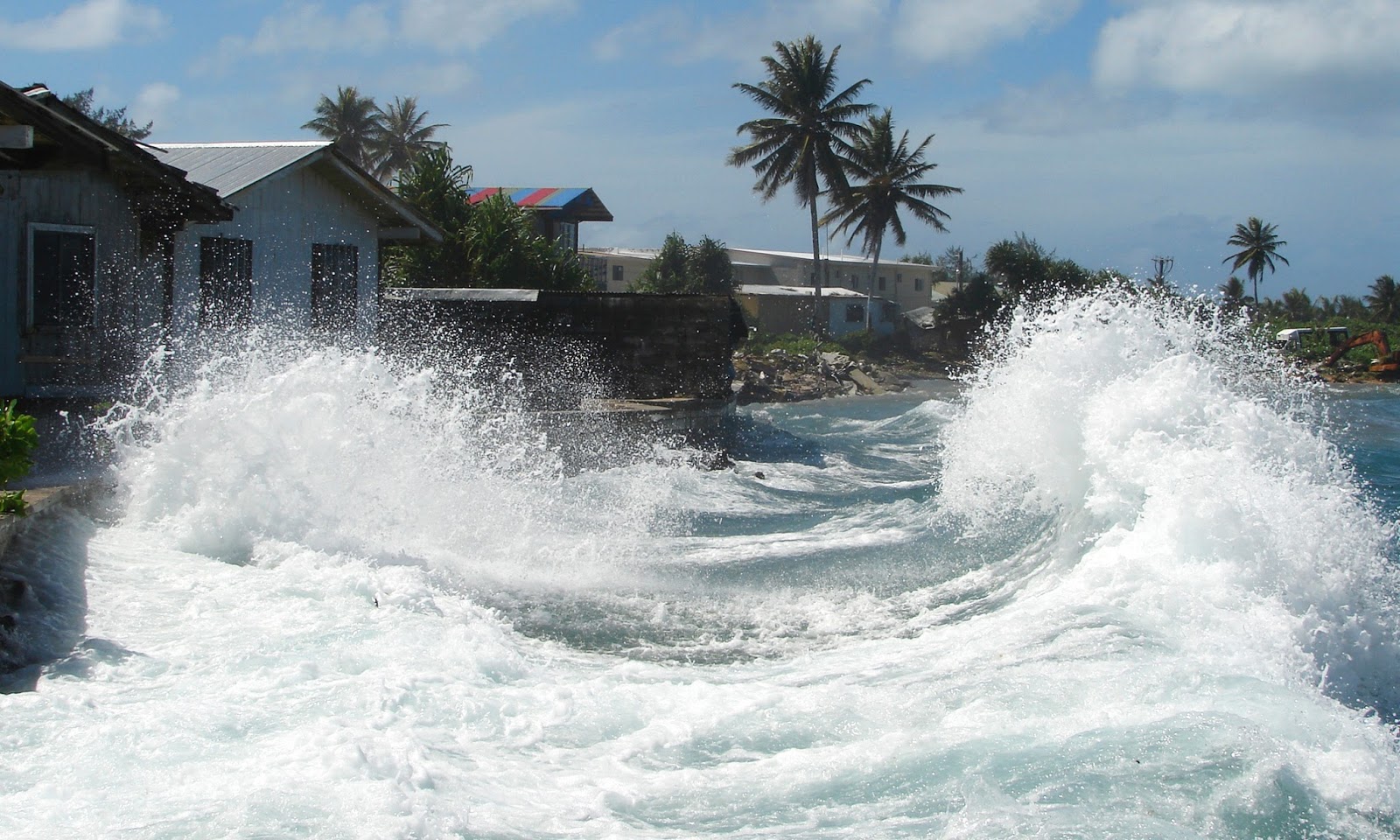
Prof Barnosky correctly assesses the magnitude of our challenges. If we assume, for example, that population will stabilize at 10 billion by 2050 and that car ownership continues to grow at a modest pace to the ownership level seen in Eastern Europe today (a lower level than that found in Canada or the USA). If we then assume that cars get double the gas mileage they do today, we would still overshoot the CO2 emission levels needed to maintain GW to 2 C. (Some students of GW / CC believe that even a 2 C rise is too high! A 1.5 C maximum global temperature rise would be required to prevent major flooding of Pacific island nations, which would produce numerous climate refugees.)
Some potential green technologies of interest for a carbon free future
- Green Machines: Microbes (possibly genetically engineered) to produce biofuel and food. Smoke stack gases could be pumped into algal cultures. The CO2 would be converted via photosynthesis into energy containing molecules: sugars, starches, oils, hydrogen.. In theory, one could construct a closed cycle similar to that existing in nature. The resulting biofuels and food would be burned (in motors, in humans and livestock), liberating useful energy (for work and metabolism). Oxydization (burning) re-releases the CO2 captured by algal photosynthesis. As in nature, the total amount of CO2 in the atmosphere would stabilize, since the total stock of carbon in the system is fixed. (Fossil fuels break the equilibrium of the photosynthetic cycle because by digging up naturally "sequestered" carbon and burning it we are continually adding to the atmospheric stock of carbon - clearly not a sustainable option in the long run..)
Trees and other soil retaining plants can be used to reclaim arid lands, for example, in subsaharan African "greenbelts". Land reclaimed by greenbelts can then produce food and other economically valuable products.
Reclaimed wetlands (bogs, fens, swamps, marshes, mangroves) can, with good ecological design, be used to treat urban sewage. Biomass production may provide useful products. Wetlands can provide places of natural scenic beauty and refuge for migrating birds (now endangered by habitat destruction).
- Natural gas produces less CO2 per unit energy delivered than coal and oil. It could be used as a "bridging technology" to green energy production, giving us a bit more time to install / develop alternative energies like solar, wind, tidal, geothermal,.. Natural gas could ease the economic strain of rapid technological conversion of energy sources.
A potential problem! Shale gas obtained through fracking has been linked to methane emissions, methane being an even more potent GHG than CO2.
- Carbon capture and storage whereby CO2 from electricity generation is pumped underground into natural storage reservoirs. Widely touted by the fossil fuel industry, economic studies recently have called into question its real utility before 2050. But we need to reduce GHG long before then! There are also unanswered questions about the long term stability of sequestered CO2 - will it escape? when? how fast? under what conditions..
- Nuclear power. According to Prof Barnosky, nuclear energy is "extremely efficient and clean". Wrong! Thermodynamically, it is "like using a pile driver to crack walnuts". The high quality (intense) energy produced by the reactor is badly matched to many domestic, commercial and industrial uses (space heating, water heating, low and medium temperature steam). Even when generating electricity (a high quality energy) that is intended for high energy density uses, nukes have to transmit that electricity over long distances. Remember: no one wants nukes in their back yard! Long distance transmission dissipates electricity as heat in the resistance of transmission lines. In addition, much of the energy produced by nukes is rejected as heat into bodies of water, disrupting or destroying aquatic ecosystems. In theory one could capture this waste heat and use it for local low temperature electrical generation, industrial processes and for heating domestic and commercial spaces ("cogeneration"). But such uses are rendered impossible by the fact that, again, no one wants nukes in their back yard. And as to the "cleanliness" of reactors: Tchernobyl and Fukiyama! It seems to me that prof Barnosky fails to grasp the significance of Murphy's Laws:
1- Anything that can go wrong will go wrong
2- Anything that cannot go wrong will go wrong
3- Any attempt to eliminate errors of type 1 and type 2 will, by making the system more complex, increase the sources of type 1 and 2 errors.
Which means, basically, that in the Real World, shit happens. The Real Question then is: what kind of shit is more acceptable, morally and socially? A Tchernobyl meltdown or a giant wind tower that throws a blade which crushes a house and kills two people?

what's worse, a wind generator or a nuke meltdown?
Looking out beyond midcentury, nukes present other serious disadvantages. They are the product of high technology and require andadvanced techno-industrial support system. Given the political instability which CC / GW will surely bring, the stability of such advanced industrial infrastructure is called into question. We should be focusing our efforts towards the low and medium technology level, produced locally / regionally and hence providing some resilience in the face of large scale societal disruption. In short, nukes are too fragile a solution for the "Hard Times Ahead".
- Hydropower: much of the large scale hydro power potential has already been tapped (developed countries). However, mini-hydropower installations could be useful locally and regionally.Hydropower presents its own set of challenges such as ecosystem disruption: one can end up trading off electricity for food (lost fish stocks). Hydropower installations are probably most effective on the smaller end of the scale (especially in crowded countries). One challenge for 21st century hydropower: GW is expected to reduce water flow and / or increase the risk and severity of drought in many regions, making hydro less attractive. Locally, hydro may be a potentially valuable energy source; globally, less so.

 overshot water wheel on left
undershot water wheel on right
click on image for enlargement
- Geothermal energy: A promising, currently underestimated source. It's potential future contribution to the New Energy supply is not well known.
studentenergy.org/topics/geothermal - for the Basics
http://www.ucsusa.org/clean_energy/our-energy-choices/renewable-energy/how-geothermal-energy-works.html#.V0SaKC5uOSo
gives a more technical description.

There are two basic forms of geothermal energy. The first uses high temperature sources in the earth. Hot steam or water - naturally occuring or injected - is used to bring the heat to the surface where it is used to turn turbines to produce electricity or to heat domestic and commercial spaces directly. This form of geothermal can also provide heat and steam for industrial processes.
The second form of geothermal (ground source heat pump) uses the technology of the common refrigerator to move heat around using an external energy source such as wind, solar, hydropower, biomass.. In summer, heat extracted from a hot building is pumped (using standard refrigerator or air conditioner technology) out of the building into an underground heat sink. The sink gets a bit warmer and the building a lot cooler. In winter the underground sink is used as a heat source. Heat is pumped up from the heat source to heat the building. What is neat about this form of geothermal is that it is efficient, cost effective and the technology is well understood: no (or few) surprises!. If the external energy source used to move heat around is green, the carbon footprint is essentially zero.

Despite its advantages, upfront installation costs can be heavy indicating a need for government rebate and / or subsidy for homeowners and small businesses. One "zero sum" approach would either loan the installer (homeowner or business) money or provide a tax deduction. Then during the life of the geothermal system the owner would repay his loan or tax deduction (plus administrative fees). The state would provide, therefore, zero net subsidization for geothermal installation. It would merely redistribute the costs over the lifespan of the geothermal unit, making it easier for the owner to overcome heavy installation costs.
- Tidal Energy extracts kinetic energy - "energy of movement" - from moving water to turn generators to produce electricity. Energy can be extracted from waves, daily tidal movements and persistent ocean currents. At present this is a new technology with relatively unproven potential and ecological impacts. It would appear to provide several advantages for a low energy use / reduced global population future. Unlike nuclear or photovoltaic solar, the technology appears relatively uncomplicated. If we are entering an era of de-industrialization, deglobalization, decentralization and depopulation (as I suspect we are), dependence on high tech is a definte no-no. Keep it simple, stupid! Simple and capable of being built and maintained with local / regional know-how, technology and resources.

- Wind Power captures the kinetic energy of wind to turn a generator to produce electricity. Wind is intermittent and often seasonal in intensity peaks. Intermittency requires adaptations. Battery storage and distributed power grids from which a producer / consumer extracts energy when he needs it and sells surplus power to when he produces more than he consumes are two possible partial solutions. Surplus wind power can be used to produce hydrogen and oxygen by electrolysing water. The oxygen can be sold and the hydrogen stored for later use: it can be burned in a turbine or fuel cell, for example. In some places excess wind power may be used to pump water into a hydroelectric reservoir thus storing energy in the water column's height (gravitational potential energy). Depending upon location, wind power is now becoming - or already has become - competitive with conventional energy sources like thermal (coal or gas fired) electric generation and nuclear electricity.

- Solar Energy is actually several forms of energy. The sun rays can be used to passively heat buildings. The rays are captured through glazed surfaces (windows or skylights) and used to heat thermal mass: a dark brick wall or dark colored interior spaces. In the evening, insulating shutters are closed to minimize heat loss and the heated thermal mass radiates heat to the cooling building interior. Wise passive solar design can provide for most, if not all, domestic and commercial heating in much of the US. It has the advantage of being simple, cheap and low maintenance; in the case of new housing, there is an additional 10 - 15% upfront cost during planing and construction. Thermal solar energy can be used to provide hot water for domestic and commercial spaces. Applying economies of scale would suggest the use of neighborhood solar domestic water heating in urban areas. An entire city block (or more) would share a common solar heating system and tank. The reduced surface to volume area of a large tank would reduce heat losses, particularly useful in cold climates.
Solar radiation concentrated by lenses or reflectors can be used to heat dark surfaces through which fluids flow (water,..) to produce steam to turn turbines to generate electricity. To smooth out diurnal variation in power production - as well as for cloudy days - the convertor should be oversized. Excess solar heat can be stored in molten chemical salt mixtures. At night or on cloudy days, heat can be extracted from the molten salt storage to boil water to make steam to turn turbines..

Photovoltaic cells transform the radiant energy contained in sunlight directly into electricity.
http://www.uccs.edu/~rtirado/PES_1600_SolarEnergy/fotovoltaic_effect.pdf
PV is much in vogue these days and is becoming competitive with conventional energy sources. A source of worry concerns pollution resulting from the extraction of the exotic metaloids used in solar panels. Another potential problem is the necessity of maintaining an advanced techno-industrial base, rather dicey if tomorrow's world is turbulent and strife torn (a direction in which we are obviously headed..)
The same arguments applied earlier to geothermal energy, tax rebates and government loans to homeowners are applicable to solar homes and commercial spaces. To facilitate adoption the State should - at least - ease the initial cost of installation. Well designed domestic solar systems require only maintenance costs, the fuel (sunlight) is free! This should make it easy for the homeowner or small business to repay a government loan for solar installation. We have to begin thinking creatively about these measures..
However, all this technology is useless unless there is a real political will to deploy it (and deploy it in time, before we run out of cheap fossil fuels). At least as important are local (individual and community based) efforts to
- reduce carbon footprints through recycling, energy conservation, green buildings, green machines (replace industrial with biological processes), co-generation (waste heat from industry used to generate electricity, heat homes,..) See note 5.
- stimulate local / regional commerce and industry (economic and political decentralization),
- foster organic (or ecological) farming by local farmers and farmer / consumer co-ops. Such measure reduce energy inputs to agriculture (pesticides, fertilizer) as well as energy for transport and storage,
- adopt a vegetarian or low animal protein diet since growing vegetables consume less energy and water per unit food value produced. The vicious treatment of livestock in factory "farms" is also eliminated. (It should be noted, however, that vegetarianism does not always give the biggest bang for the buck, nutritionally speaking. In some ecosystems it makes ecological and economic sense to graze livestock on grass and then eat the milk or meat..)
- promote public transport, car pooling and sharing,
- develop the sharing economy (which reduces waste, energy inputs and pollution),
- invest in community-owned and managed wind, solar and other renewable energy projects,
- push for early adoption of distributed producer / consumer power grids (where many users of energy are also small time producers, extracting energy from the grid when they need it and selling surplus energy to the grid). Such grids, well designed, reduce infrastructure requirements and cut electrical transmission losses. They also promote individual and community autonomy, virtues we need to develop for the New (post cheap fossil fuel) Energy Economy,
- actively support conservation biology measures to preserve essential ecosystem services for future generations (recalling that it will be prohibitively expensive and probably impossible to fully replace them with technological substitutes). Prof Barnosky argues that Western societies should pay third world countries to sequester carbon in living forests. This, he argues, is often cheaper than the technological alternatives. It also has the advantage of maintaining biodiversity, essential to maintain fully functioning ecosystems services,
- engage in consumer awareness and militancy. Consumers, says prof Barnosky, have learned to vote with their wallets, forcing Big Biz to go green(er). Progess is slow but real. I agree but my question remains: is change happening fast enough to avoid long term environmental - societal - demographic collapse? On the negative side are the partially successful disinformation campaigns conducted by the fossil fuels lobby.
http://transparencycanada.blogspot.ca/2015/08/the-organisation-of-denial-conservative.html
This campaign has slowed - but not halted - the acceptance and development of green energy, especially in North America.
In sum, I agree with most of prof Barnosky's ideas. Except that I believe we have waited too long to go green to avoid (some) disaster. Against my will, I have become a Doomer: a squishy soft Doomer in that I believe in and sincerely hope for collapse followed by rebound. Although such an idea may seem hopelessly naive to some in these cynical times, collapse and rebound are actually the norm.
Life recovers after mass extinction events (usually smarter and stronger than before).
If we had listened to early whistle blowers like Rachel Carson, we would have mostly completed the conversion to a green economy by now. (Carson's Silent Spring - 1962 - recounted the negative environmental impacts of pesticides, especially on birds.) Cumulative GHG levels now would be lower and our climate would not be as screwed up as it is now. We would, most likely, not be facing the current geopolitical / economic turbulence. But instead, for the last fifty years, we have listened to the Business-as-Usual con artists. Now, after the binge, the hangover is hard to handle..
This ends the review of Dodging Extinction. However, in part two - to appear - I will propose my own "realistic and imperative" mesures to deal effectively with out ecological, environmental and demographic challenges.
notes:
1- the Scandinavian experiment in Green energy. Scandinavian and other Nordic countries (Germany, Scotland..) are ahead us here in North America in the transition to a green economy (based on renewable energy with a low carbon footprint)
http://blueandgreentomorrow.com/features/clean-energy-scandinavian-nations/
"..Denmark’s economy grew by 45% from 1990 to 2007 and its CO2 emissions were reduced by more than 13%. This shows that ‘green’ and ‘growth’ are not conflicting terms, and that they indeed can coexist – something that UK chancellor George Osborne, who famously said, “We’re not going to save the planet by putting our country out of business”, could learn from."
“The main goal for Denmark is to have its own local energy security, not having to rely on anyone else to keep the lights on”
"Denmark is planning to produce 100% of its energy from renewables by 2050 and has a number of ambitious green energy goals in place."
2- Ecosystem services, a few examples, chosen at random.
- Energy capture: the sun's energy drives the world. Plants capture sunlight and store it in energy rich molecules (sugars, starches, fats, oils), providing a chemical energy source for the living world. Herbivores steal some of the plant stored energy to maintain their metabolisms and to carry on their activities. Simply to maintain a living body against (spontaneous) chemical degradation - "entropy" - requires energy and building materials (obtained in food). To actively act on the environment (via muscles, nerve and sense organs) requires even more energy. Life is sustained by a dependable flux of energy. No energy - no life. This is the basic scientific understanding of life we have today.
http://transparencycanada.blogspot.ca/2015/04/extraterrestrial-life-in-our-solar.html
- Waste removal and material recycling: The byproducts of life are molecules degraded in energy content (following extraction of usable energy). "Waste" includes other left-overs like food scraps, cadavers.. If all this stuff - containing atoms essential to life: carbon, oxygen, hydrogen, sulfur, phosphorus, nitrogen, iron, calcium, sodium, chlorine.. - were not broken down and recycled by decomposers (microbes, fungi, cadaver beetles, ants..), life would have vanished aeons ago, drowned in a mass of waste and cadavers and starved of essential chemical "building blocks".
- Drugs, worth many billions of dollars in sales, are often modelled on naturally occuring biochemicals. Aspirin is copied from salic acid (from willow trees).
"The therapeutic properties of willow tree bark have been known for at least 2,400 years, with Hippocrates prescribing it for headaches" (wikipedia: aspirin). Contrary to what many believe, antibiotics occur in nature. Human medecine merely discovered what had been there for hundreds of millions (if not billions) of years! Even modern drugs like captopril (for hypertension and kidney failure) are derived from natural analogs, in this case, the venom of the (very!) deadly fer-de-lance viper of Brazil.

On elemental recycling:
http://transparencycanada.blogspot.ca/2015/10/book-review-vaclav-smil-cycles-of-life.html
For a more general treatment of ecosystem services, consult Seth Reice: The Silver Lining:
http://transparencycanada.blogspot.ca/2016/01/book-review-disaster-ecology-bright.html
3- Imperial State / historical society / Patriarchy: Before "civilization" humans lived in hunter-gatherer communities of several dozen to, perhaps, several hundred members. Maybe around six to eight thousand years ago, a new mode of social organization appeared, variously referred to as "historical societies" (possessing a written history), the "Imperial State" or "Patriarchy". The imperial state is based on the accumulation of land and wealth by a centralized, highly hierachalized, urbanized elite employing large scale military aggression. I refer to this mode of economic aggrandizement as "plundernomics", the economics of colonial expansion, plunder, squander and waste. Historically, the imperial state fostered progress in several areas particularly in technology which serves the ends of war. Eventually, imperial states' technological competition assisted (strongly!) in the birth of science. Modern science emerged from the cumulative impact of technological advances in the arena of competing colonial European Imperial States (1500 - 1850). In one sense, the chronological, historical one, science is organized technology..
It is arguable that the imperial state and "plundernomics" have reached the end of the line. Circa 1850, the world had been cicumnavigated by European Imperial States and their multinational corporations: "the sun never sets on the British Empire". We simply have no new lands left to plunder. On the contrary! We are actually drowning in the waste products of our ancient systems of plunder.. Should we wonder then that the Club of Rome Report (1972) found that severe shortages of non-renewable resources would begin to appear sometimes in the 21st century?
We simply need a new economic model - or we will "die" (that is, die-off in vast numbers..)
http://transparencycanada.blogspot.ca/2014/08/four-pillars-of-sustainable-economy.html
4- Another receding techno dream: fusion energy. I'm old enough to remember when we were enticed by the promise of "economically viable electricity from fusion by the year 2000". A coalition of 35 countries is currently constructing the ITER fusion reactor project in southern France. The experimental facilities are expected to be completed "around 2020" (at a cost of maybe $21 billion which would pay for a lot of research into CHEAP solar energy and local biomass energy production). Assuming that ITER is completed by 2020 and hits it really lucky we could expect a breakthrough toward cheap fusion power by 2030. Add another 10 - 20 years to demonstrate commercial viability and safety (and work out the inevitable bugs, rather large ones for such a hairy assed technology..) So, dreaming in technicolor, we could possibly see viable fusion power by 2040 - 50 -60. Hardly much use for the world's energy needs TODAY, 2016!
5- Cogeneration is one of those no brainers that, oddly, has not caught on in N. America. It is more widely used by the wily Scandinavians. The principles are well understood, the technology is "off the shelf", easily available or producible. The efficiency of a well designed system is quite surprising.
Consider an industrial process converting 40% of its input energy into some useful product or service. 60% of the energy input to the process is rejected to the environment as "waste heat". If co-generation captures and converts this waste heat to a useful product or service with 30% efficiency, the overall efficiency of the combined process (industrial process + cogeneration) is 40% + .30 X 60% or 58%. This represents a (58 - 40) / 40 % or a 45% boost in overall efficiency! One uses 45% less energy - and produces 45 % less pollution - to do the same amount of work. Definitely a no brainer..