Showing posts with label government. Show all posts

Tuesday, November 22, 2016

Trudeau government, Year 1: the corruption of power?

                                                     Parliament, Ottawa
  
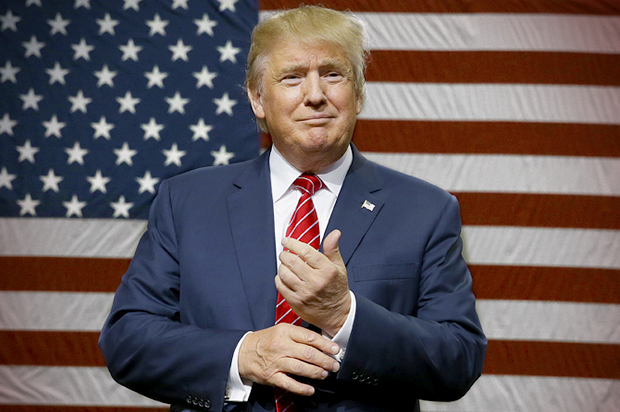
            There is a saying, attributed to various sources, "Power corrupts, and absolute power corrupts absolutely" which seems to apply to the Trudeau government in these its early days. No nothing truly scandalous. President elect Donald Trump is more entertaining for the scandal seeking.

            But consider the practice of $1500 per place fundraisers for the Federal Liberal Party. The opposition is arguing that these gatherings provide the super-wealthy with privileged access to Trudeau cabinet ministers and to the Prime Minister himself. Aside from the PM, Finance Minister Bill Morneau and Justice Minister Jody Wilson-Raybould have attended these exclusive fundraisers. Nothing illegal is taking place, of course, but what is legal is not necessarily moral.

fundraiser-with-chinese-billionaires-does-not-pass-the-smell-test

           In this case the government has failed to adhere to its own standards regarding transparency.

             On Nov. 27, 2015, the Trudeau government released an 87-page document called "Open and Accountable Government" which says ministers and parliamentary secretaries 

 "must ensure that political fundraising activities or considerations do not affect, or appear to affect, the exercise of their official duties or the access of individuals or organizations to government.. There should be no preferential access to government, or appearance of preferential access, accorded to individuals or organizations because they have made financial contributions to politicians and political parties,"  (emphasis added)

             The problem is that during the election Trudeau and his team promised "transparency" - as, interestingly, the Harper government before them! They were shaking down votes by appealing to the voters' rising sense that world society (and Canada) are adrift and heading toward some ill-defined future cataclysm. Witness the sentiments expressed in the BRexit referendum which took the UK out of the European Union or the "stunning" populist victory of Trump in the recent American elections. One need hardly mention the rise of the populist Right in France, Germany, Austria, Holland, Scandinavia,..

           Trudeau reached out to a skittish populace and offered them consolation and comfort: we are on your side, we will prove it by standing above vested interests who place themselves above national interest and the Common Good. Not only must transparency be achieved but the appearance of transparency must be achieved..

          Trudeau has failed on this one. We are back to government-as-usual. The "fix is in" as Trump like to argue during his campaign. Big Money talks Big (at least, this is the perception people are getting..) Worse, when confronted with disquieting facts, Trudeau dodges by turning and pointing a finger at the Conservatives' lousy record of blurring the line between partisan politics and governance. When the pot calls the kettle black..

Trudeau defends fundraisers by attacking Conservatives' record 


                          controversial Light Armored Vehicle sales to Saudi Arabia

              Before the last federal election which brought the Liberals to power, Harper's Conservatives contracted to sell Light Armored Vehicles (LAVs) to Saudi Arabia despite the fact that the Saudi government has used such vehicles against dissident elements of its own civilian population and abroad. Such usage contravenes Canada' own weapons export regulations:

"Attacks on civilians – or even serious, reasonable doubt that the Saudis would use LAVs only for their stated military purpose – would raise red flags under Canada’s weapons export rules, which forbid weapons shipments “unless it can be demonstrated there is no reasonable risk that the goods might be used against the civilian population” by the buyer."

Saudi LAV deal in a nutshell 

           One has to concede that the Feds were between a rock and a hard place on this one. If they refused to sign the deal the outgoing Harper Conservatives had negotiated, they would be held responsible for job losses in Ontario where the vehicles are constructed.

           One option that presented itself to the incoming Trudeau team: open the nature of the LAV deal to parliamentary (and public) debate along with the demonstrated Saudi record of human rights violations committed with such vehicles. This High Road moral approach would still probably lose them some votes in affected parts of Ontario but gain them votes elsewhere (in addition to confirming their commitment to probity and transparency).

            Unfortunately, the Trudeau government chose the Low (government as usual) Road and they did so in a particularly cheesy way. The Liberals claimed, falsely, that the Saudi LAV sale was a "done deal", put into motion by the defeated Harper government and their was nothing they could do about it. Nothing could have been further from the truth! In reality, Foreign Affairs Minister Stéphane Dion signed export permits allowing the vehicles to be shipped. Without his signature neither vehicles nor their "spare parts" would have left the country.

"Foreign Affairs Minister Stéphane Dion has quietly issued export permits for the bulk of the shipments tied to a controversial $15-billion sale of combat vehicles to Saudi Arabia, a crucial green light for the deal that many thought had already been granted.

Mr. Dion approved six export permits on Friday covering more than 70 per cent of the transaction, newly released documents show – a decision that represents the most vital step in the Canadian government’s arms-control process. The Liberals have long said they could not interfere with what they described as a “done deal” arranged by the Harper Conservatives."


           Once again, a smell test failed. This does not auger well for a government barely a year into its mandate. People were voting for change when they voted Trudeau..

           Speaking of voters seeking change. Voters in the US revealed the degree to which the chattering classes inhabit a parallel universe by voting the "impossible" Donald Trump as their next president. The Trump presidency could pose some interesting existential challenges for the Trudeau government!


            For openers, Environment Minister Catherine McKenna recently announced plans to accelerate the phase out of coal fired electricity. Meanwhile, south of the border, President elect Trump wants to phase coal back in again. The two leaders seem out of phase on this one (note 1).
 http://www.cbc.ca/news/politics/canada-coal-electricity-phase-out-1.3860131

              Yet once again, Trudeau seems the prey of indecisiveness. He has argued that Canada need infrastructure (this is true, bridges and buildings in Québec fall down and kill people..) In a Keynesian attempt to stimulate a flagging economy, Trudeau has promised increased Federally-driven infrastructure development, some of it the renewable energy sector. Yet he has not really bitten the bullet yet. He has not made the messy, the politically incorrect - yet necessary - choice: choose renewable energy infrastructure development over oil pipelines and other forms of fossil energy. He is still clinging to mealy-mouthed "please everyone" platitudes about using pipeline revenues to finance the conversion to a green energy economy. We have left those days far behind! Today is the time of choosing, we have run out of time..

trudeau-says-pipelines-will-pay-canadas-transition-green-economy  

             Then there are the social value issues and questions of "style". Women make up a whopping 50% of the Trudeau cabinet. So far President elect Trump has not announced any female members of his cabinet. 

             In a similar vein, Trump, during the election at least, promised to build a wall separating the US and Mexico - and make the Mexicans pay for it! As part of his campaign, Trudeau promised to "throw the doors open" to Syrian refugees, one promise he has kept (note 2). Once again, the two leaders appear to be out of step. At this stage of the game, one can only guess what the outcome will be.. 
 

notes:

1- Some pundits have argued that Trump won't get far with his zombie coal strategy. Depending upon where you live, renewable energies are already a bit cheaper, the same price or within striking difference of coal fired electricity rates. Economics, they argue, will trump Trump's populism. When the rubber hits the road..

http://solarcellcentral.com/cost_page.html


2- In a sense, Trudeau - like Trump - does not have much of a platform, few really new ideas, just government-as-usual with a few tweaks and some fancy spin. (This criticism applies to all, or most, governments and parties in the so-called "developed world", not just to Trudeau and Trump. The "System" is broke and too broke to fix. We need a new breed of popular - community based - leader to think outside all boxes and all existing political ideologies.) During their victorious campaigns, both Trudeau and Trump appealed to popular sentiment (emotions, public self images, nationalistic clichés..) Trump played the Angry White Man card (AKA: Hard Working Ordinary American card). Trudeau played the Compassionate, Tolerant Canadian card. Both lead to hasty ad hoc policy commitments which neither country is in a position to fufill. Just think of the economic impact of sudden massive tariffs on Mexican or Chinese imports on the standard of living of all those Angry White Men who voted for Trump! And here is a text that argues that Canada was not ready to accept the numbers of refugees Trudeau has attempted to resettle:

a-critique-of-the-trudeau-governments-immigration-policies

           Make haste, make waste!

Tuesday, July 26, 2016

Bastille Day massacre: what more is needed?


           Yet, once again, the world is shocked by terrorist atrocity. An alarm is sounding in the night, why does no one answer?

            For the third time in eighteen months, France has fallen victim to a terrorist massacre. Security forces are overworked and reserves have been called up for relief. Are the jihadists winning?

           Nice, France, July 14, 2016, Bastille Day (the national holiday):  a French citizen of Tunisian ancestry with a history of mental illness and familial violence drove a heavy truck into a  crowd returning from a fireworks display. 84 people were killed outright and others maimed (not to mention the psychological scars). Such attacks are evidently becoming more common recently. But why? Where do we break the pattern? What are the causes? How do we address them?

          Perhaps most disquieting: if, indeed, terrorists seek to provoke overreaction, they may be winning.

http://www.theatlantic.com/politics/archive/2015/12/donald-trumps-call-to-ban-muslim-immigrants/419298/

           The US Republican presidential candidate, Donald Trump, calls for a temporary ban on Muslim immigration to the States till the American "government figures out what the hell is going on". But this was back in December, 2015, before the recent spate of terrorist attacks (and some copy cat massacres carried out by the mentally imbalanced).
           
            The contemporary phenomenon of jihadist terrorism is, on the surface, bizarre. Young people, especially young men, strap themselves to bombs, blow themselves up, taking as many victims with them as they can.

            The perpetrators profess fanatical faith in radical fundamentalist versions of Islam, believing they will go to an eternal reward in Paradise for their bloody self destruction and mass murder. At the beginning of the "scientific", "technically advanced" and "rationalist" 21st century such acts appear mad or absurd to many.

            Who, then, are these "madmen"? (Are they, in fact, really mad?) Studies of psycho-social profiles reveal that only a minority actually have severe mental health problems. (Psychologically, they are often of a "narcissistic" and "paranoid"character - but then so are many people who are classified as sane..)

            Many of the jihadists sympathizers (Canada, USA, Norway, UK..) are native born citizens of the countries they attack. Some of these are of Middle Eastern or African ancestry and appear to have been converted to radical Muslim and jihadist views from sympathy for Muslims suffering from the West's unending wars in the Middle East (note 1). Many of the Western jihadists (and sympathizers), however, are not of Middle-Eastern or African origin. These "native sons and daughters" were radicalized through Internet jihadist groups, once again, on the basis of perceived injustices toward Muslim populations on the part of Western countries. In many cases (France), jihadists of Middle-Eastern / African origin (whether native born or immigrants) suffer from racial / ethnic" religious discrimination, bigotry and poverty (multigenerational poverty in some cases). Yet, interestingly, there seems to be no - or few - "typical" jihadists (even in Western countries). For example, some sympathizers are, contrary to expectations, well educated and of upper middle class origin.

             Consider: the Fort Hood (Texas) massacre of 13 persons by Nidal Hasan, a US army major and professional psychiatrist in 2009.

          To some degree, there are national variations in the types of people drawn into jihadist violence. Jihadist sympathizers in France often come from criminalized youth gangs. This is much less the case in North America, where the sympathizers are more often of the "idealist" variety. Of course, such variation in psycho-social profiles between countries makes it difficult to pin down and define who, exactly, is susceptible to jihadist radicalization.

             The case of France is particularly troubling. Arabo-african residents, immigrants and naturalized citizens - often their children and grandchildren - are herded into suburbs, often dilapidated and crime-ridden, where there is little chance for employment. Obviously, many will turn to the drug trade and petty crime. Integration of these groups appears to be much less successful than in North America. For example, recent polling data suggest that Canadian Muslims are "increasingly patriotic" and "well integrated" into Canadian society. However, even here, there is evidence of increasing polarization among the young. Younger Muslims are more likely to see themselves under scrutiny by the rest of society and to practice an Islamic lifestyle (mosque attendance..)

http://www.cbc.ca/news/politics/grenier-muslim-canadians-environics-1.3551591

           As an informal anecdotal observation on the status of Muslim integration in France, I have begun to meet young French immigrants (non-Muslim) who are testing the waters here in Québec "for a few years" before deciding to set down roots. These are people just starting families. They were driven out of France by what they see as a rising tide of racism and extreme Right wing politics. They don't want their kids raised in such a social climate. Québec appears attractive: francophone, democratic, socially mobile, peaceful (note 2).

            OK, ethno-racial relations are bad and apparently getting worse. So what can be done?

How to get yourself labelled racist (without even trying)

            Inscrutable problems may have no solution. Or the solution may be obscure: we may have been searching for an answer in the wrong place. In this case we have to change our perspective: we have to re-contextualize / re-frame the problem and start asking new questions. Then we might find some new answers..

             One thing strikes me when I look at the evolution of societies since the end of World War II: we had an opportunity to launch Sustainable Development in the third world and we blew it. No one country or political system is indicted here: all seem roughly equally culpable: communist, capitalist, socialist, East, West, old industrialized countries like Britain or newly industrialized ones like Japan..

            At any rate, we have to begin asking questions like: who really has benefited from "development" programs since the end of WW II? 

            At the end of WW II the communist and capitalist powers entered into the "Cold War" for world domination. In a sense, the decolonizing third world countries were pawns in this struggle. The Korean War was fought on Korean, not American or Soviet, soil. This allowed the super-powers to avoid mass destruction (perhaps mutual destruction) as a result of modern warfare conducted on their own territories. Third world countries also provide the "developed" world with raw materials like minerals and cash crop commodities like palm oil (regardless of negative ecological, social and economic impacts on the host society). In short, the superpowers of the Cold War era were interested in world domination within the context of "business-as-usual" economics and technology (a system that I call "plundernomics": the imperialistic exploitation - plunder - of the earth, its biosphere, peoples and cultures).

             Yet, there were "prophets" who saw the looming ecological disaster ahead. Aldous Huxley, 46 years before the publication of the Club of Rome Report: The limits to growth (1972), wrote a science fiction novel, Brave New World, describing a future world in which humanity (or post-humanity) lived in ecological balance with nature. Hundreds of years in the future a globalized, centrally controlled technocracy ruled through rational management. Population was rigorously controlled. Non-renewable resources were scrupulously recycled. Nothing was wasted. Famine and endemic disease were eliminated (most people died of boredom..) An ecological utopia! - except that no one was "free" (the question of freedom was never even posed..)

              In retrospect, Huxley's novel demonstrates - by default - an alternative approach to our current demographic / ecological crisis: small scale ("modular"), decentralized, locally governed, locally initiated economic development. Today, Transition Initiatives is a global movement which attempt to embody these values in the transition to carbon free, green technology.

https://transitionnetwork.org/ 

           Transition Initiatives' principles:

https://transitionnetwork.org/about/principles 


             Such small scale, decentralized, participatory development would actually foster the things we in the West say we care about: democracy, empowerment of the little people (recall "the American Dream"), the flourishing of small scale enterprise and entrepreneurial skill. Oddly, though, neither the Soviets ("communists") nor the USA ("capitalists") embraced such small scale, participatory, ecologically friendly development. The reason for the Western powers, at least, to eschew such development are pretty obvious after a little study and reflection. Such development doesn't fit well with multinational corporation style: centralized, mass market oriented, driven by profit ( and / or market share control) and not by local "common goods" (consisting of numerous, often conflicting, interests). In the obsessive and monomaniacal drive for profit (or market share control) if local ecologies and civil rights have to be trampled and hard done by, So Be It! God's name is, after all, The Almighty Buck. Thus Western powers, like their Communist counterparts, promoted heavy industry (above all, extractive industries like mining and cash crop agrobusiness). Local dictators were supported - if not installed - by both sides to assure their control over essential resource flows (the "developed" countries had already, to a large degree, depleted their own non-renewable resource bases so now they had to prey on the "undeveloped" countries). The net result over the seven decades since the end of WW II have been disastrous, of course. Rather than pursue ecologically sound development, both West and East programmed the (pseudo-)"development" of the third world along the same abortive pathway they themselves had followed. And now we are suffering, Karmic payback for our evil acts - the jihadists, for example..

              My argument is simple, though it will get me labelled as anti-immigrant, racist and reactiony. So Be It - FTW!

              Millions of years of primate and hominid evolution have programmed people to love the cultures, peoples and climates they were born into. (True, there are those who are born with a wander lust, people who naturally aren't comfortable in one place, but these are a statistical minority and don't affect my thesis.) Normally, people - though they may enjoy a bit of travel now and then - want to remain close to what they grew up with as children. They emigrate only if they are forced to, because of famine, war or poverty.

              I contend that we are facing refugee crises today - and the culture shocks they produce - because we have collectively botched the development of the third world in the seven decades following WW II. People are now struggling to leave overcrowded, ecologically devastated, chronically underveloped societies which cant provide the Good Life they were promised by Western peddlers of "development" and "progress". We simply have not delivered on the promises of the Enlightment and its dogma of "Infinite Perfectability". On this point, the Communist world was even less successful than the capitalist West. They could not even meet the needs and expectations of their own (internal) populations. That is why they are no longer among the living..

              Increasingly, of course, as climate continues to degrade due to anthropogenic climate change and global warming, all the above crises - overpopulation, chronic underdevelopment, thwarted dreams.. - will be amplified in their local impacts. And since we live in an interconnected - globalized - world, these local negative impacts of failed development will rebound on to the geopolitical scene. As the recent tragedy of Bastille Day, 2016, amply attests..    
     

notes:

1- To muddy the waters even more: "radical Muslim" and "jihadist" are not synonyms - despite the ravings of rabble-rousing populists like Donald Trump. A person may adhere to a faith in a "radical", "extreme" or "assiduous" fashion without advocating the suppression of other faiths and their adherents."Christian fundamentalism", for example, does not equate with anti-semitism.

2- Québec is, generally, a tolerant society but it is not paradise. A couple of years ago the "social democrat" Parti Québécois attempt to bolster its failing popularity by appealing to populist (ethno-racist) sentiments. A "charter of Quebec values" was proposed - but never enacted - which would, among other measures, prohibit the "ostentatious exhibition of religious symbols" in public institutions like schools, hospitals, government offices.. The target was Muslim women wearing the hijab. Fortunately, an election intervened, the Parti Québécois was thrown out and we have not heard of the infamous charter of values since. Good riddance!

http://transparencycanada.blogspot.ca/2013/09/left-wing-populism-in-quebec.html 

http://transparencycanada.blogspot.ca/2013/09/pandoras-box-to-open-or-not-to-open.html 

Wednesday, December 16, 2015

Canada at the Crossroads?


          After the election, back to the Liberals after an unpleasant 10 year cohabitation with the (neo-)Conservatives.

          Times have changed. Justin Trudeau is not his father: he's admitted as much - to his advantage. The last thing he needs is comparison with the past: "big shoes to fill" and all that.. Less still does he need the practices and values of the recent political past, Liberal or Conservative. He needs to have the space to start over again, from ground zero, to think outside the box, to think outside the past..

          The father, Pierre Eliot, was conventionally "progressive" in some areas: decriminalization of homosexuality, promotion of the French language and culture immediately spring to mind. But the legacy is not all postive and the son needs the elbow space to think things anew. For example: Pierre Trudeau accelerated the already emerging trend toward centralization of power in the Prime Minister's (PM) office. Centralization and bureaucratization, of course, emerged as forces during the last few centuries as populations swelled, industrialization destroyed older decentralized, locally autonomous economies and as increasing knowledge and specialization required centralized coordination of effort. Pierre Trudeau was not the author of centralization of power, he merely rode the crest of a wave that was rising. The effect of his government was to make our government more ressemble the American presidental system.

           Harper, in his turn, merely continued the trend but with a populist, vindictive mean-spirited edge. Harper took centralization of power into authoritarian micro-management and cultivated a hostile relation with the press reminiscent of authoritarian regimes. His government actively suppressed environmental science and earth scientists who they suspected supported a pro-Climate Change "agenda". In doing so, they weakened some of the major democratic checks on centralized power: freedom of the press, of speech, of opinion, of assembly (footnote 1). One can only refer to as the Paranoid Style in Canadian politics. Anyone who was raised in a Right wing community in the US during the early Cold War years (like yours truly), recognizes that hate and fear driven style of social engineering. Today, one need look no further than Donald Trump in the US Republican primary elections for an example of the (counterproductive) Paranoid Style of politics in practice.

http://www.bbc.com/news/world-asia-35109350


Here are a few examples of the Harper Government's attempts at social engineering in Canada:

internal blog links (keywords: censorship)

http://transparencycanada.blogspot.ca/2012/04/decline-and-fall-of-canadian-science.html 

http://transparencycanada.blogspot.ca/2013/03/blow-open-doors-and-let-real-world-in.html 

http://transparencycanada.blogspot.ca/2013/04/the-imperial-prime-minister-wither.html 

http://transparencycanada.blogspot.ca/2014/05/canada-new-face-of-authoritarianism.html 

 http://transparencycanada.blogspot.ca/2014/06/a-little-truth-little-candle.html


           With his evident - and subservient - connection to the "oil patch",  one could argue that under Harper Canada was well on the way to becoming another Petro-State, a state controlled by foreign "extractive industry" companies and investors and their local (bootlicking) clients (note 2).

http://transparencycanada.blogspot.ca/2014/11/book-review-tar-sands-dirty-oil-and.html 


           Again, the important thing to keep in mind is that we are - potentially at least - at the end of an era, the start of a new. The signs are written on the wall for all to see. The reactionary Harper "regime" grew increasingly flat, stale, repetitive, meanspirited and philosophically inbred. "Everybody" felt it, hence the strength of the informal - and citizen driven - ABC (Anyone But Conservative) movement during the last half of the campaign. The country needed a transfusion of new blood, spirit and thought. The challenge of the newly elected Trudeau Liberal team will be to deliver..

           Such collective moods, and reactions, are, of course, "symptomatic". They seem to reflect a deeper malaise of the political system (and the dominant classes, their culture and values). At such times, electors will violently reject one party - like the scandal ridden, morally derelict Chrétien Liberals - for another, the Harper (neo-)Conservatives.

           In time, the Conservatives proved to be as morally derelict and intellectually bankrupt as the Liberals. And now the ball has been hit back into the Liberals' court.. (Not quite.. In reality, the "Third Party", the New Democrats, were possibly set to make a breakthrough under folksy charismatic leader Jack Layton. But the rising star was doomed to fall: Layton died of cancer in August, 2011. The new leader, Thomas Mulcair, a recycled Québec provincial Liberal, was not the match for the challenge. In a desperate attempt to win voters on the center-right of the spectrum, Mulcair waffled all over the board on issues such as budget deficits, green energy, pipelines, gun registration, the wearing of religious symbols in public settings.. saying whatever would please a particular audience. In this age of instant information, people saw through the ruse and his support crashed in the latter phases of the election.)

            The task for the Trudeau team is "daunting". The future economy will be dominated by a shift towards decentralization, deglobalization and relocalization. Despite the present glut of shale oil from the USA, in the long run Peak Oil (the end of really cheap energy) will assure this transition. Trudeau will have to play the role of the helmsman steering this country into unexplored waters. So far he has made the right noises: "green energy", restoring Kitimivik (Canadian domestic Peace Corps), investment in infrastructure, social justice for First Nations, greater political participation by women, freedom of speech for environmental scientists, open door to Syrian war refugees.. During the campaign, Trudeau matured as a politician (possibly a dubious gain!) At the beginning, he was bottom man on the totem pole with New Democrat Tom Mulcair leading. Trudeau proved to be an apt campaigner with a steep learning curve (a good sign). He surprised the pundits, I suspect. Will he prove to be as competent a leader as campaigner? Or will he prove to be a disappointment as Obama has been for so many..

The people must hold the Liberals' feet to the fire.

Trudeau's biggest challenge: decentralization, decentralization, decentralization.. 


https://www.blogger.com/blogger.g?blogID=8403090612918247270#editor/target=post;postID=989302572390520961;onPublishedMenu=posts;onClosedMenu=posts;postNum=1;src=link 

http://transparencycanada.blogspot.ca/2015/05/reclaiming-citizenship-draft-2.html 

http://transparencycanada.blogspot.ca/2015/04/towards-new-citizenship_9.html 

http://transparencycanada.blogspot.ca/2015/03/reclaiming-citizenship.html 


           Above all, as a leader at a time of transition, Trudeau will have to rise above the cant, rhetoric, hollow formulas and rigidified ideology of the "Old Regime". He will need to replace these with a new, open, science based approach to political organization and economic development. Dare we say, he needs to exhibit - or rapidly develop - Wisdom, the ability to view the world from a high place, to grasp the Big Picture and translate that vision into actions that benefit those living today and our children.

 http://transparencycanada.blogspot.ca/2014/08/four-pillars-of-sustainable-economy.html 


Edgar Morin: Les Idées, tome IV de La Méthode, Seuil, 1995. My Translation (with slight editing and adaptation):

The difference between theory and ideology / doctrine / dogma

"To recapitulate the elements which oppose doctrine and theory: DOGMA (or doctrine) is closed in on itself, THEORY is relatively open. In both, the (semantic) core resists contradictory evidence but in dogma, internal consistency is the prime directive. In theory, the correspondance between the logic of the theory and the "outside world" is of primary importance. In addition, in dogma the linkages between concepts are extremely rigid (often symbolic or "mythological" in nature). In theory, linkages are of a logical nature. One could say that dogma has a strong "immunological system": it can only accept what confirms the dogma. The theoretical "immunological system" only rejects what is not relevant to its field of investigation.

.. All systems of ideas (ideology, theory, dogma..) tend towards self-closure and self-reference.. However, the fundamental dynamism of science lies in the necessity of a VERDICT, obtained through OBSERVATION or EXPERIMENTATION, which counteracts the tendancy towards DOGMATISATION... At the other end of the spectrum, in the political and social realms, doctrinaire rigidity is the norm, not the exception, and appeal to an external (or objective) verdict is either weak or applied too late.." (One only need think of religious, political or racial ideologues: fundamentalists, climate change "sceptics", neo-nazis, islamophobes..)


notes:

1- The irony here is exquisite! In the early Harper years, Haprper and friends delighted in attacking Commie China for "civil rights abuses" which would include, of course, freedom of the press, freedom of speech, association and opinion. Until, however, the Harper gang discovered there was big money to be made for their corporate friends in trade with China (especially in sale of Alberta tarsands derivatives to oil hungry China). It was a bit weird really.. From being a (red) hot button issue, Chinese civil rights abuses just sort of fell off the radar screen.. and dropped into some black hole..

2- Generally, the "host" government - the one whose natural resources are being extracted - is subservient to the foreign companies (and their governments).

ecological effects of oil spills / Nigeria

 Only Saudi Arabia, which controls a large fraction of the world's oil reserves, has a government with enough clout to dictate (to some degree) it's conditions to its petro-clients.